
Targeted Therapy: How Tumor Genetics Are Changing Cancer Treatment
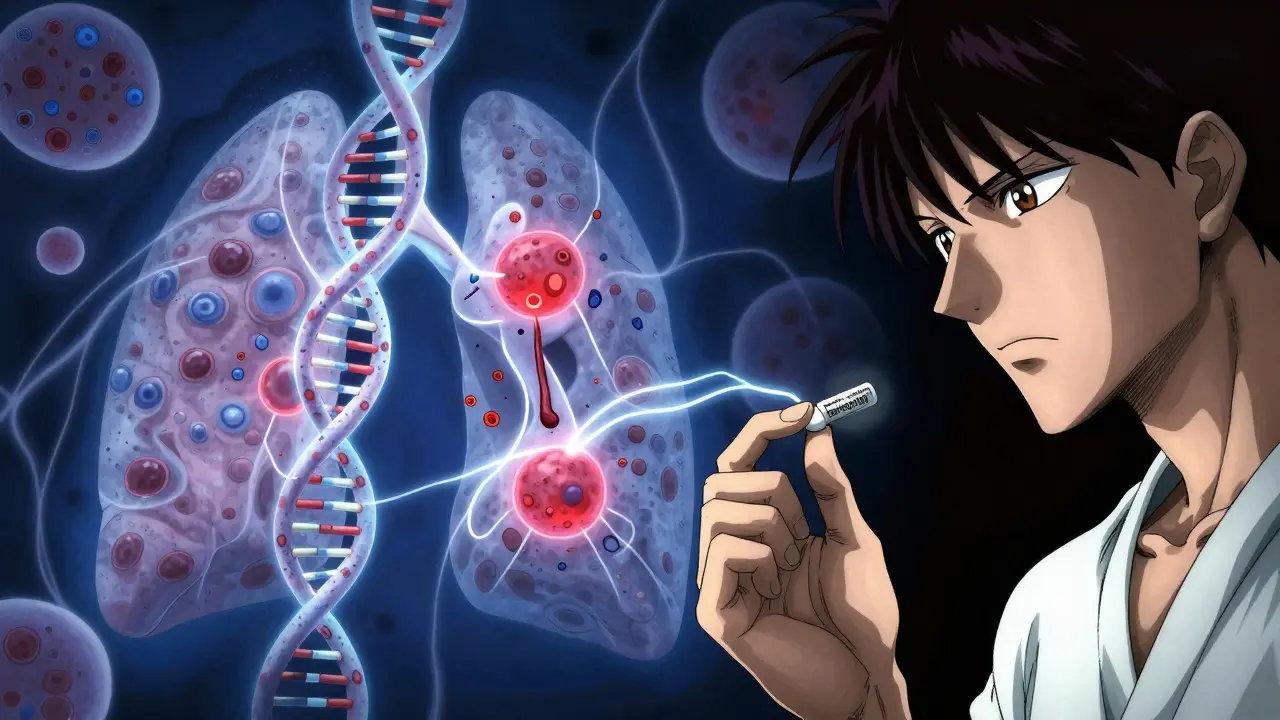
What Targeted Therapy Really Means for Cancer Patients
For decades, cancer treatment meant one thing: chemotherapy. Drugs that killed fast-dividing cells - good and bad. Patients lost hair, felt sick constantly, and sometimes saw their tumors shrink - only for them to come back. But today, something different is happening. Instead of treating cancer by where it lives in the body - lung, breast, colon - doctors are now treating it by what’s happening inside the tumor’s DNA. This is targeted therapy: a treatment that hunts cancer based on its genetic fingerprints.
It’s not science fiction. It’s happening right now. In 2024, 73% of all new cancer drugs approved by the FDA were targeted therapies. That’s not a trend - it’s the new standard. And it’s changing lives. A patient with advanced lung cancer and an EGFR mutation might now live five years or more, not months. A child with a rare tumor and an NTRK fusion can respond to one pill with a 75% chance of tumor shrinkage, no matter where the cancer started. This isn’t luck. It’s precision.
How Targeted Therapy Works - Not Magic, But Molecular Science
Every cancer has a unique genetic story. Some tumors have broken switches - genes that got stuck in the “on” position. These are called oncogenes. Examples include EGFR, ALK, BRAF, and RET. Others have broken brakes - tumor suppressor genes like TP53 that stopped working. Targeted therapies are designed to hit those exact broken parts.
There are two main types of drugs used. The first are small molecules - pills you swallow. They slip inside cells and block the signals that tell cancer to grow. Osimertinib, for example, blocks the EGFR mutation in lung cancer. The second type are monoclonal antibodies - IV infusions that latch onto proteins on the surface of cancer cells. Trastuzumab does this for HER2-positive breast cancer. Neither attacks healthy cells the way chemo does.
But here’s the catch: these drugs only work if the tumor has the right mutation. Give osimertinib to someone without an EGFR mutation? It won’t work. That’s why testing is non-negotiable.
Biomarker Testing: The Gatekeeper to Effective Treatment
Before any targeted therapy starts, you need a genetic map of the tumor. This isn’t a simple blood test. It’s next-generation sequencing (NGS) - a deep dive into hundreds of cancer-related genes. Panels like FoundationOne CDx or MSK-IMPACT analyze 300 to 500 genes at once, looking for mutations, fusions, and other changes.
But it’s not easy. You need enough tumor tissue - 20 to 50 nanograms of DNA - and at least 20% of the sample must be actual cancer cells. If the biopsy is too small or old, the test can fail. Turnaround time? Usually 14 to 21 days. That’s a long wait when you’re scared.
And then there’s the data. Results come back with terms like “VUS” - variant of unknown significance. That means the gene change was found, but no one knows if it’s driving the cancer. About 20-30% of tests return these ambiguous results. It’s frustrating. You get a result, but no clear answer.
Still, when the test works - when it finds a match - the difference is dramatic. In EGFR-mutant lung cancer, osimertinib extends life by nearly 9 months compared to chemo. The risk of cancer spreading drops by over half. For many, it’s not just longer life - it’s better life.
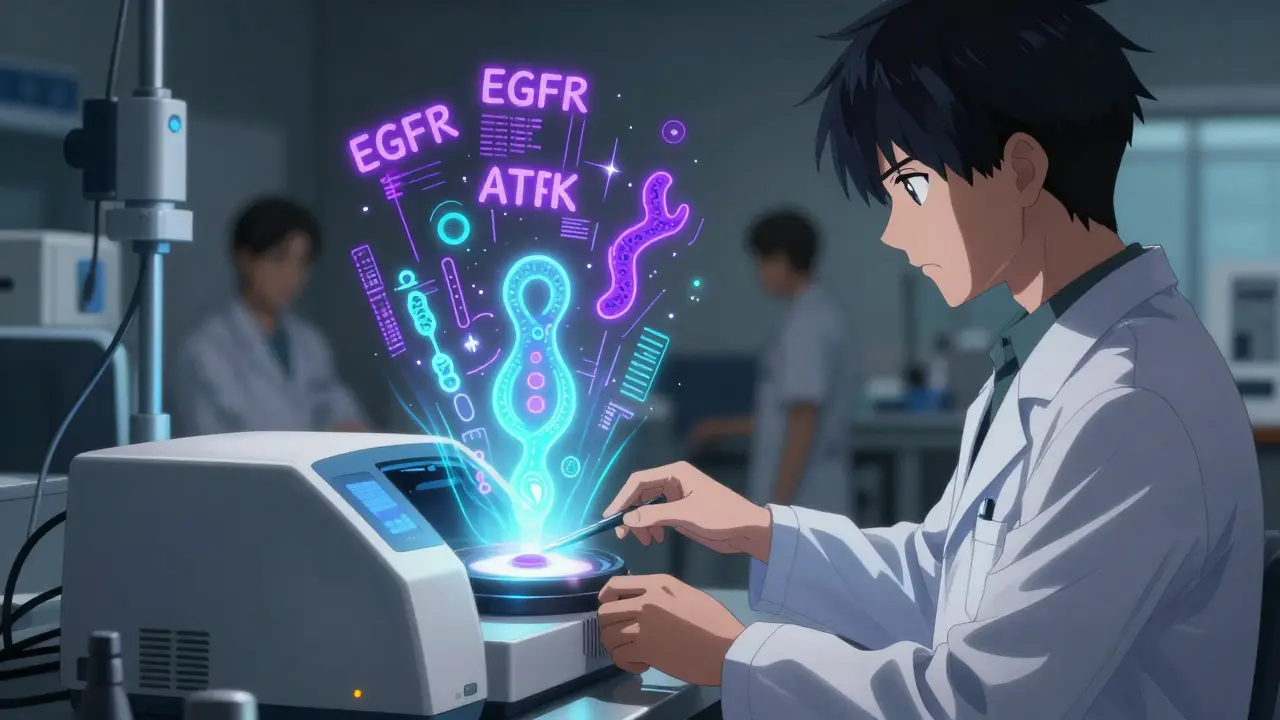
Why Targeted Therapy Isn’t a Cure-All
It sounds perfect, right? But here’s the reality: only about 13.8% of cancer patients have tumors with currently targetable mutations. That means for most, this option isn’t even on the table.
Even when it works, resistance almost always follows. In 70-90% of cases, the cancer learns to adapt. A new mutation pops up. The drug stops working. The tumor grows again. That’s why many patients now get repeat biopsies or liquid biopsies - blood tests that catch tumor DNA floating in the bloodstream. Guardant360, for example, can detect resistance mutations months before a scan shows growth.
And then there’s cost. A single month of targeted therapy can run $15,000 to $30,000. Chemo? $5,000 to $10,000. Insurance fights are common. A 2022 survey found 55% of patients faced denials for genomic testing. Some waited over a month for approval. One Reddit user wrote: “My tumor has an NTRK fusion. Larotrectinib works in 75% of cases. But my insurer said it’s not ‘standard’ for my cancer type.” That’s not science - that’s bureaucracy.
Who Benefits Most - And Who Gets Left Behind
Targeted therapy has been a game-changer for certain groups. Patients with advanced non-small cell lung cancer, melanoma with BRAF mutations, and HER2-positive breast cancer now have survival rates that would’ve been unthinkable 20 years ago. Some cancers, like chronic myeloid leukemia, have gone from deadly to manageable - like diabetes.
But the benefits aren’t equal. In the U.S., 65% of advanced cancer patients get genomic testing. In Europe, it’s 22%. In Asia, just 8%. Why? Access. Testing requires labs, trained staff, and funding. Most community hospitals can’t afford it. Only 32% of community hospitals have molecular tumor boards - teams of specialists who interpret complex genetic reports. Academic centers? Almost all do.
And then there’s the racial gap. Black and Latino patients are less likely to get tested, even when they have the same cancer type. The NCI’s RESPOND initiative is trying to fix this - a $195 million push to close equity gaps in precision medicine. But progress is slow.

The Future: What’s Coming Next
The next wave of targeted therapy isn’t just about single drugs. It’s about combinations. Scientists are now testing drugs that hit the cancer’s mutation AND its environment at the same time. For example, pairing a BRAF inhibitor with an immune booster. Early results are promising.
Artificial intelligence is stepping in too. IBM Watson for Oncology now matches treatment plans to genetic profiles with 93% accuracy compared to human tumor boards. That’s not replacing doctors - it’s helping them keep up with the flood of new data.
And the FDA is changing rules. In 2018, they approved pembrolizumab for any solid tumor with MSI-H - regardless of where it was located. That was the first “tissue-agnostic” approval. Now, drugs like larotrectinib and selpercatinib follow the same model. If your tumor has an NTRK or RET fusion, you qualify - even if it’s in your salivary gland or thyroid.
By 2030, experts predict 40% of cancer patients will get a biomarker-driven treatment. That’s a huge leap from today’s 13.8%. But it won’t happen without better access, lower costs, and more research into tumor suppressor genes - the broken brakes that still have no drugs to fix them.
What Patients Should Know
If you or someone you love has advanced cancer, ask this: “Can we test the tumor for genetic mutations?” Don’t wait. Push for it. Ask if your oncologist works with a molecular tumor board. If they don’t, ask if they can refer you to one.
Insurance denials happen. But you’re not powerless. Organizations like the Personalized Oncology Alliance offer free expert reviews for community oncologists. Some drugmakers have patient assistance programs. And if you have a rare mutation, ask about clinical trials - they’re often the only way to get access to the latest drugs.
Targeted therapy isn’t magic. It doesn’t work for everyone. But for those it does help - it’s life-changing. It means fewer side effects. More time. More control. More hope.
How do I know if targeted therapy is right for me?
You need a genetic test of your tumor - usually through next-generation sequencing (NGS). Ask your oncologist if your cancer type has known targetable mutations. Lung, melanoma, breast, and colorectal cancers are most likely to qualify. If you have advanced or metastatic disease, testing is strongly recommended. Don’t assume you’re not a candidate - many patients are surprised to find a match.
How long does biomarker testing take?
Most tests take 14 to 21 days. That’s because labs need enough tumor tissue, run complex sequencing, and interpret the results. Delays happen if the biopsy sample is too small or if the lab needs to retest. If you’re waiting longer than 3 weeks, follow up. Time matters.
What if my test shows a variant of unknown significance (VUS)?
A VUS means a gene change was found, but experts don’t know if it’s driving the cancer. It’s not actionable - meaning no approved drug targets it. Don’t panic. Don’t assume it’s useless. Some VUS become clear over time as more data is collected. Ask your oncologist if your case should be reviewed by a molecular tumor board. In rare cases, a VUS might still guide clinical trial options.
Why are targeted therapies so expensive?
These drugs are complex to develop, require specialized manufacturing, and target small patient groups. R&D costs are high, and companies set prices based on what the market will bear. A single month can cost $15,000-$30,000. Insurance often denies coverage, especially for off-label use. Patient assistance programs, clinical trials, and nonprofit organizations can help reduce costs - but you have to ask.
Can targeted therapy work for rare cancers?
Yes - and that’s one of its biggest strengths. Drugs like larotrectinib and selpercatinib are approved based on genetic markers, not tumor location. So if you have a rare cancer - say, secretory breast cancer or a pediatric sarcoma - and you have an NTRK or RET fusion, you may qualify for these drugs. The NCI-MATCH trial proved this: patients with rare cancers responded when matched to the right mutation, regardless of where the cancer started.
What’s the difference between targeted therapy and immunotherapy?
Targeted therapy attacks specific genetic mutations inside cancer cells. Immunotherapy helps your immune system recognize and kill cancer cells. They’re different. But they’re often used together. For example, a patient with melanoma might get a BRAF inhibitor (targeted) plus a checkpoint inhibitor (immunotherapy). Some tumors respond better to one, some to both. Testing helps determine which approach fits best.
Are there side effects with targeted therapy?
Yes, but they’re usually different - and often less severe - than chemo. Instead of nausea and hair loss, you might get skin rashes, high blood pressure, diarrhea, or fatigue. Some drugs affect the liver or heart. But grade 3-4 side effects (serious ones) happen in only 15-30% of patients, compared to 50-70% with chemotherapy. Most people can keep working and living normally.
Can targeted therapy cure cancer?
In most cases, no - not yet. But it can turn aggressive cancers into chronic conditions. For example, chronic myeloid leukemia used to be fatal. Now, with imatinib, most patients live normal lifespans. In lung cancer, targeted therapy can shrink tumors for years. While a cure remains rare, the goal now is long-term control - and that’s a huge win.





Comments
Harriot Rockey
February 2, 2026 AT 16:24This is honestly the most hopeful thing I've read about cancer in years. 🥹 I have a cousin who just started osimertinib-her energy came back in weeks. No chemo hair loss, just a rash she jokes is her 'new glow.' We're all holding our breath, but for the first time, we're not just waiting for the worst. Thank you for writing this.
Geri Rogers
February 2, 2026 AT 20:45If you're reading this and have advanced cancer-ASK FOR THE TEST. Seriously. Don't let your doctor brush you off. I had a VUS for 8 months until I pushed for a second opinion. Turned out it was actionable. Your life is worth the fight. 💪❤️
Joseph Cooksey
February 2, 2026 AT 20:54Let’s be honest-this whole precision oncology movement is a beautifully packaged capitalist fantasy. We’re talking about drugs that cost more than a Tesla, developed for patient populations smaller than a high school class, while millions can’t even get basic radiation. The science is dazzling, yes-but the system is a rigged casino where only those with insurance, connections, and the stamina to navigate bureaucracy get to play. And don’t get me started on how 'tissue-agnostic' approvals sound revolutionary until you realize they’re only for the 1.2% of patients who can afford the biopsy.
Susheel Sharma
February 4, 2026 AT 04:08The data here is cherry-picked. 73% of new drugs? Sure. But 87% of those are for non-small cell lung cancer or melanoma. Meanwhile, pancreatic, ovarian, and glioblastoma? Still dead ends. And you call this 'precision'? It's precision for the privileged. The rest of us get placebo hope and a 14-day wait for a test that might not even work. This isn't progress-it's performance.
Coy Huffman
February 5, 2026 AT 22:31i mean… it’s wild right? like we’re basically hacking evolution now. tumor’s got a glitch? we got a pill for that. but then u look at the cost and the wait times and u just… sigh. why does healing have to be so broken? 🤔 i hope they fix the access thing before we get the tech to cure everything. otherwise we’re just making richer people live longer. not cool.
Katherine Urbahn
February 6, 2026 AT 17:17I must emphasize, with the utmost gravity, that the assertion that targeted therapy is 'life-changing' is, at best, an emotionally charged oversimplification. The data you cite-while statistically significant in controlled trials-fails to account for real-world adherence, comorbidities, and the psychological toll of prolonged molecular uncertainty. Furthermore, the omission of long-term toxicity profiles, particularly cardiotoxicity with TKIs, is ethically irresponsible. One cannot laud a treatment without acknowledging its systemic burdens.
Demetria Morris
February 7, 2026 AT 04:38I got tested. VUS. No drugs. No hope. Just a piece of paper that says 'we found something but we don't know what it means.' I'm 32. I have two kids. I'm supposed to just wait for science to catch up? This isn't medicine. It's a waiting game with a price tag.
Wendy Lamb
February 7, 2026 AT 16:47My mom’s on selpercatinib. Tumor shrank 60% in 3 months. No chemo side effects. She’s gardening again. It’s not magic. But it’s real.
Roshan Gudhe
February 8, 2026 AT 19:10There’s a quiet revolution here. We’re moving from organ-based treatment to mutation-based treatment. That’s like going from treating 'fever' to treating 'bacterial infection.' But the real question isn’t whether it works-it’s who gets to benefit. Science doesn’t care about borders or bank accounts. But the system does. We need global access, not just American breakthroughs.
Rachel Kipps
February 10, 2026 AT 19:02i think this is really important but i just want to say i had a biopsy last year and the lab lost the sample… twice. and then they said 'maybe try a liquid biopsy' but my insurance said no. i’m not mad, just… tired. this system is so hard to navigate. thank you for explaining things clearly.
Janice Williams
February 11, 2026 AT 05:45The notion that targeted therapy represents 'hope' is a dangerous illusion perpetuated by pharmaceutical marketing. The 13.8% statistic is not a triumph-it is a indictment. We have created a medical caste system where survival is contingent on genetic luck and financial privilege. To call this 'progress' is to normalize injustice as innovation.
rahulkumar maurya
February 11, 2026 AT 14:51Ah, the American medical-industrial complex strikes again. In India, we don’t have NGS panels. We have one lab in Mumbai that does it, and the cost is equivalent to a year’s salary for a middle-class family. And you people are celebrating 'tissue-agnostic' approvals? Meanwhile, a child with an NTRK fusion here gets palliative care because 'it’s too rare to treat.' This isn’t science-it’s colonial medicine with a Silicon Valley gloss.