
Evergreening: How Pharmaceutical Brands Delay Generic Drugs to Protect Profits
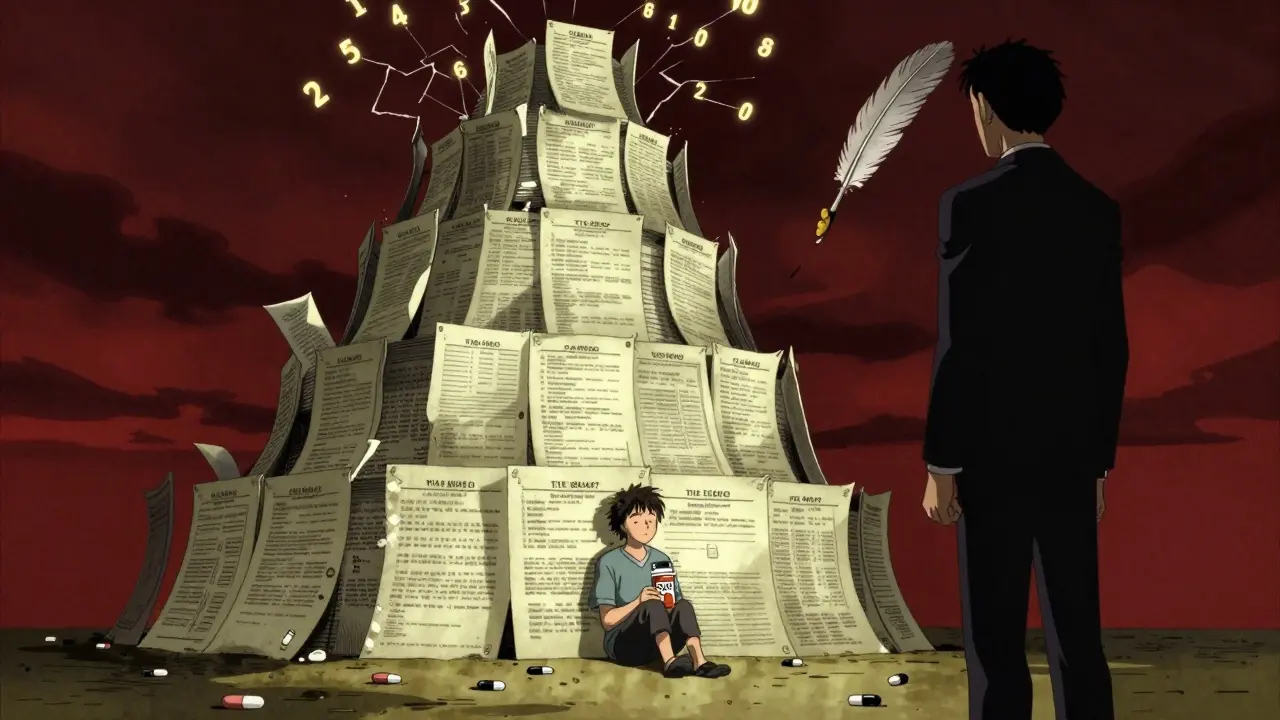
When a life-saving drug loses its patent, prices should drop - often by 80% or more. But in many cases, they don’t. That’s not because no one can make the generic version. It’s because the brand company has spent years quietly building a wall of patents around the same old drug, stretching its monopoly far beyond what Congress intended. This isn’t innovation. It’s evergreening.
What Evergreening Really Means
Evergreening isn’t a dirty secret. It’s a documented, widespread practice. When a drug’s original 20-year patent is about to expire, pharmaceutical companies file new patents on tiny changes - a slightly different pill coating, a new dosage timing, or a combination with another common ingredient. These aren’t breakthroughs. They’re tweaks. But under U.S. patent law, even minor modifications can earn a new 20-year monopoly.
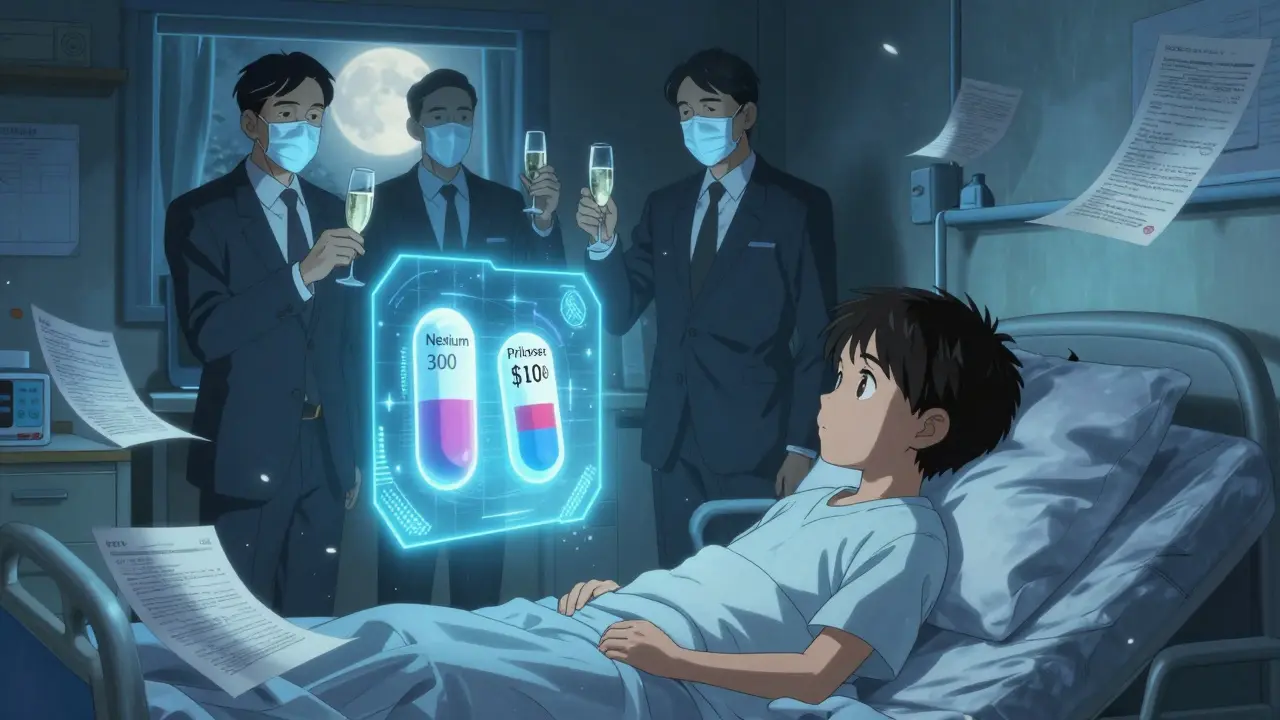
Take AstraZeneca’s Prilosec, a blockbuster drug for acid reflux. When its patent neared expiration, the company rolled out Nexium - a chemically similar version with a single atom changed. Nexium wasn’t more effective. It wasn’t safer. But it came with a new patent. Patients paid $300 a month for Nexium, while the generic Prilosec cost $10. That’s not a better drug. That’s a price lock.
Harvard researchers found that 78% of new patents filed for prescription drugs between 2005 and 2015 were for drugs already on the market. Not new treatments. Same drugs, new paperwork.
How It Works: The Patent Playbook
Companies don’t just file one new patent. They file dozens. The goal? A patent thicket - a tangled web of overlapping protections that makes it too expensive and risky for generic makers to challenge them all.
AbbVie’s Humira, a drug for rheumatoid arthritis and Crohn’s disease, is the most extreme example. The company filed 247 patents on this one drug. Over 100 were granted. That’s not innovation. That’s legal obstruction. Humira became the best-selling drug in history - earning $40 million a day - not because it was revolutionary, but because generics couldn’t break through.
Here’s how the playbook usually unfolds:
- New formulation: Change the pill’s release time - say, from immediate to extended-release. Patent it.
- New delivery method: Switch from a pill to an injectable pen. Patent it.
- New combination: Bundle the drug with another common medication. Patent the combo.
- Pediatric extension: Run a small study in kids. Get six extra months.
- Orphan drug status: Repurpose the drug for a rare condition. Get seven years of exclusivity.
- Authorized generics: Let your own subsidiary make the generic - but sell it at full price under a different name.
These aren’t loopholes. They’re features of the system. The 1984 Hatch-Waxman Act was meant to balance innovation with access. But companies learned how to game it.
Why It Matters: Real People Pay the Price
Every time a brand delays a generic, real people go without treatment. A diabetic in rural Ohio can’t afford the $900 monthly cost of a branded insulin when the generic version costs $35. A veteran with psoriasis skips doses because the $12,000-a-year biologic isn’t covered. These aren’t edge cases. They’re routine.
Generic drugs enter the market at 80-85% lower prices. That’s not speculation. It’s data. When Humira finally lost patent protection in 2023, its price dropped nearly 70% in just six months. That’s what competition does. But for over 15 years, patients paid the cost of AbbVie’s patent thicket.
And it’s not just about money. When generics are blocked, patients are forced to use more expensive alternatives - often with worse side effects or less proven results. That’s not healthcare. That’s profit-driven rationing.
Who Benefits? Who Loses?
Let’s be clear: the winners are shareholders and CEOs. The losers are patients, insurers, and public health systems.
Pharmaceutical companies argue they need long exclusivity to fund research. But here’s the math:
- Developing a brand-new drug costs about $2.6 billion and takes 10-15 years.
- Evergreening a drug costs less than $50 million and takes 1-3 years.
That’s not innovation. That’s arbitrage. Companies are investing in lawyers, not labs. They’re not discovering new molecules - they’re tweaking old ones and calling them inventions.
The U.S. government spends over $1 trillion a year on healthcare. Drug prices account for nearly 20% of that. Evergreening is one of the biggest drivers of that cost. And it’s not just America. The World Health Organization called it a barrier to medicine access in low-income countries - where people pay 10 times more for the same drug because generics can’t enter.
Is There Any Pushback?
Yes - but it’s slow.
In 2022, the U.S. Federal Trade Commission sued AbbVie over Humira’s patent strategy, calling it an “anticompetitive scheme.” The case is still ongoing. The Inflation Reduction Act of 2022 gave Medicare the power to negotiate prices for 10 high-cost drugs - a direct blow to evergreening’s profitability. The European Medicines Agency now requires proof of “significant clinical benefit” before granting extra exclusivity.
But companies adapt. They’re moving into biologics - complex drugs made from living cells. These are harder to copy. They’re patenting genetic tests that predict who responds to a drug - effectively locking out generics by making them “untested.” They’re even using nanotechnology to create “next-gen” versions that look different but work the same.
It’s a game of whack-a-mole. Every time regulators close one loophole, companies drill another.
What’s Next?
Patients won’t win until the system changes. Here’s what needs to happen:
- Stricter patent standards: The U.S. Patent Office must stop granting patents on trivial changes. If a tweak doesn’t improve safety or effectiveness, it shouldn’t get a new monopoly.
- Limit patent stacking: No drug should get more than one extension. Period.
- Transparency: All patent filings tied to a single drug should be publicly listed and reviewed together - not buried in dozens of separate applications.
- Global pressure: Countries must stop accepting U.S.-style patent extensions. The WHO is right: access to medicine is a human right, not a corporate asset.
Some companies are starting to shift. A few are investing in true innovation. But most still rely on evergreening. It’s too easy. Too profitable. Too broken.
The system was built to reward innovation. Now it rewards legal cleverness. And while lawyers and CEOs celebrate, patients wait - and pay.
Is evergreening legal?
Yes, for now. Evergreening exploits loopholes in patent law, not outright fraud. The U.S. Patent Office still grants patents for minor changes like new coatings or dosing schedules. Courts have generally upheld these patents unless they’re blatantly obvious. But regulatory agencies and lawmakers are pushing back - especially after lawsuits like the FTC’s against AbbVie.
Does evergreening help patients?
Almost never. The new versions - like Nexium or extended-release Suboxone - rarely offer better results. Studies show they’re not more effective than the original drug. The only benefit is to the company’s bottom line. Patients end up paying more for the same treatment, or being forced to switch to less effective alternatives.
How long can a drug’s monopoly last because of evergreening?
It can stretch beyond 30 years - sometimes over 40. The original patent lasts 20 years from filing. Then, each new patent for a reformulation, pediatric study, or new use adds more time. AstraZeneca’s six top drugs gained over 90 years of combined patent protection. Humira’s 247 patents pushed its exclusivity past 2034 - more than 30 years after its first approval.
Are there any drugs that don’t use evergreening?
Yes. Many older drugs, especially those developed before 1990, never had complex patent strategies. And some newer drugs - especially those for rare diseases or developed by nonprofits - are not targeted for evergreening. But for blockbuster drugs treating common conditions like diabetes, high blood pressure, or arthritis, it’s the rule, not the exception.
Can generic companies fight back?
They try - but it’s expensive. Challenging a single patent costs $1-5 million. Facing a thicket of 50+ patents? That’s $100 million or more. Most generics can’t afford it. That’s why only a few ever make it to market. The system is designed to wear them down.




Comments
Alexander Erb
March 10, 2026 AT 20:05Bro this is wild. I had no idea a single drug like Humira could have 247 patents. That’s not innovation, that’s a legal loophole rave. 🤯 And the fact that patients are skipping doses because they can’t afford $12k/year? That’s not healthcare. That’s a hostage situation. I’m glad Medicare is finally stepping in, but we need way more than just 10 drugs. This system is rigged.
Donnie DeMarco
March 11, 2026 AT 14:00evergreening is just corporate greed in a lab coat. they dont make better drugs, they just change the color of the pill and call it a new invention. nexium? same acid reflux med, different price tag. i mean, come on. its like selling the same pizza but calling it "premium pepperoni deluxe" and charging 3x more. 🍕💸
Shourya Tanay
March 13, 2026 AT 11:41The structural incentives here are deeply misaligned. The Hatch-Waxman Act’s intent was to create a balance between innovation and accessibility, but the current patent thicket paradigm effectively transforms the patent system into a rent-seeking mechanism. The marginal cost of reformulation is negligible compared to R&D, yet the regulatory arbitrage yields multi-billion-dollar returns. This is a classic case of regulatory capture, where legal frameworks are weaponized to suppress competitive entry. The WHO’s stance on access as a human right is not merely ethical-it’s economically rational.
LiV Beau
March 15, 2026 AT 00:12I just read about someone in Ohio who’s choosing between insulin and groceries. 😭 That’s not a choice anyone should have to make. I’m so tired of companies calling this "innovation" when it’s just clever accounting. Why are we rewarding lawyers more than scientists? I’m all for funding real breakthroughs-but not this. Let’s make generics easy, not expensive. 💪❤️
Adam Kleinberg
March 16, 2026 AT 16:35This is all part of the deep state pharma cartel they dont want you to know about. The FDA and patent office are in bed with big pharma. They let these companies game the system because theyre all funded by the same shadowy groups. You think this is about profit? No. Its about control. They dont want you healthy. They want you dependent. And now theyre moving to biologics so they can lock you in forever. Wake up
Denise Jordan
March 17, 2026 AT 11:57I mean… is this really that surprising? Of course they’re doing this. It’s capitalism. You think a company is gonna leave free money on the table? If you’re mad about it, don’t buy the drug. Simple. Or maybe stop being so entitled to free medicine.
Gene Forte
March 18, 2026 AT 17:15We have the power to change this. Every vote, every letter to Congress, every conversation about drug pricing matters. The system is broken, yes-but it was built by humans, and it can be rebuilt by humans too. We don’t need more loopholes. We need courage. And we need to remember: medicine should heal, not exploit. Let’s demand better.
Kenneth Zieden-Weber
March 19, 2026 AT 09:23So let me get this straight… you’re telling me the same company that spent $2.6B to develop a drug is now spending $50M to tweak the coating and calling it a new invention? And we’re supposed to be impressed? 🤡
Meanwhile, actual researchers are begging for funding to study new cancer therapies. But nope-let’s fund the patent lawyers. Classic. The real tragedy? We’re all complicit. We keep buying the $300 pill instead of the $10 one. Maybe next time, ask your pharmacist: ‘Is this really better… or just more expensive?’