
Insurance Coverage of Generic Combinations vs Individual Generics: What You Pay and Why

When you’re on multiple medications for high blood pressure, diabetes, or cholesterol, you might notice something strange: your insurance covers two separate generic pills for $5 each, but the combination pill - the exact same ingredients in one tablet - costs $40. Why? It’s not a mistake. It’s how insurance formularies work, and understanding this can save you hundreds a year.
What Are Generic Combinations?
A generic combination drug is a single pill that contains two or more active ingredients, each already available as a standalone generic. Think of it like a pre-mixed smoothie instead of buying bananas, yogurt, and honey separately. Common examples include:
- Losartan/Hydrochlorothiazide (for high blood pressure)
- Metformin/Glipizide (for type 2 diabetes)
- Atorvastatin/Ezetimibe (for high cholesterol)
These combinations aren’t new. They’ve been around for years. But what’s changed is how insurers treat them. Many plans prefer you take the individual generics - even if it means swallowing two pills instead of one - because it’s cheaper for them. And that’s where things get confusing.
How Insurance Tiers Work
All Medicare Part D and most private insurance plans use a tiered system to control costs. Here’s how it breaks down:
- Tier 1: Preferred generics - usually $0 to $10 copay
- Tier 2: Non-preferred generics or preferred brand-name drugs - $15 to $40
- Tier 3: Non-preferred brand-name drugs - $50 to $100+
- Tier 4: Specialty drugs - often hundreds per month
Here’s the catch: a combination drug might be placed in Tier 2 or even Tier 3, while each of its individual components sits in Tier 1. So even though the combination pill contains the same ingredients as two cheaper generics, your copay for the combo could be triple what you’d pay for the separate pills.
Why Insurers Prefer Individual Generics
It’s all about cost control - and sometimes, it’s not even about the drug itself. Pharmacy Benefit Managers (PBMs) like CVS Caremark, Express Scripts, and OptumRx - who manage drug benefits for 80% of U.S. plans - have a financial incentive to push individual generics.
Here’s how it works: when you buy two separate generics, the insurer pays for each one independently. But when you buy a combination drug, the entire cost is bundled. If the combo is priced higher than the sum of the two individual generics, the insurer loses money on the deal. So they’ll often refuse to cover the combo unless it’s significantly cheaper.
According to a 2022 analysis of over 4 million Medicare Part D prescriptions, 84% of drug plans only covered generics - not brand names. That’s a strong signal that insurers trust generics. But that doesn’t mean they treat all generics the same.
Real-World Examples: What Patients Are Paying
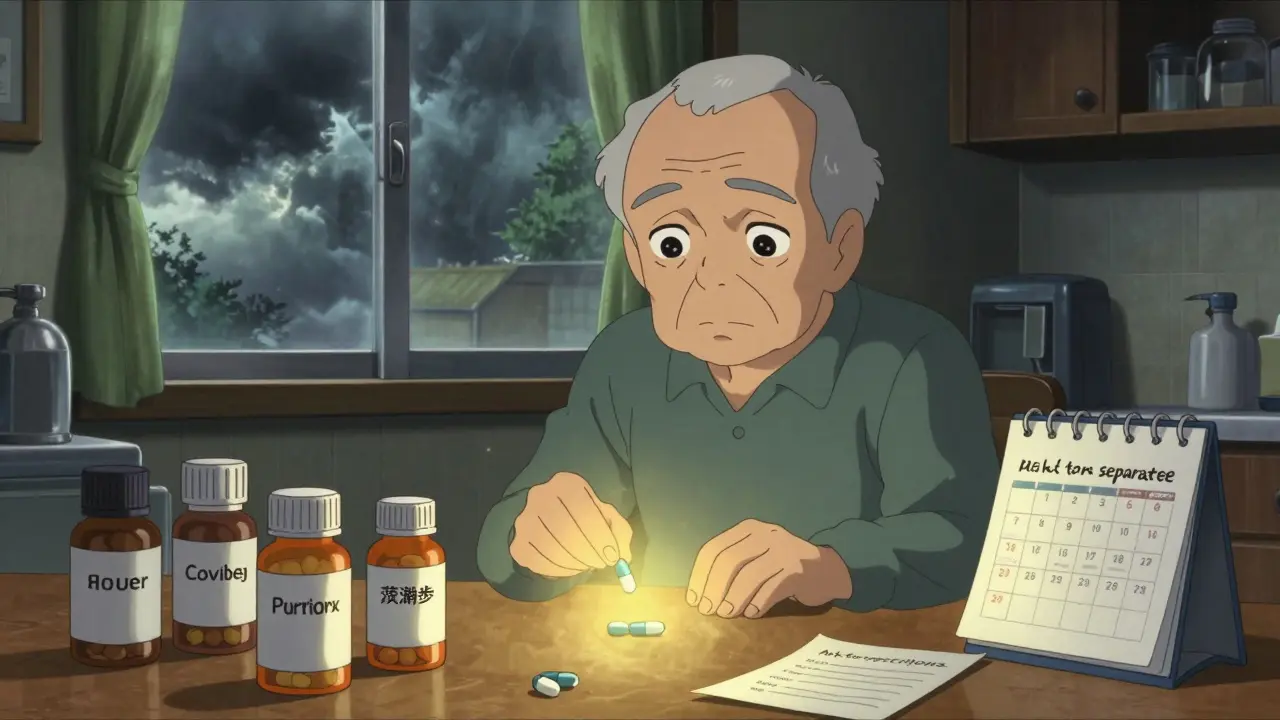
Take a common combo: valsartan/hydrochlorothiazide. The brand version used to cost $120/month. When generics hit the market, the individual generics dropped to $8 each. But the combo pill? It was priced at $45. That’s $16 cheaper than the brand - but $29 more than taking the two generics separately.
One Medicare beneficiary in Ohio told us: "I asked my pharmacist why the combo wasn’t covered at the same rate. She said, ‘Because your plan’s PBM made a deal with the manufacturer of the individual pills.’"
On the flip side, another patient in Florida got lucky: her blood pressure combo went generic at the same time as the individual components. Her copay dropped from $47 to $7 - and she didn’t have to change anything. That’s because the combo’s price fell below the sum of the two generics. That’s rare, but it happens.
The Hidden Cost of Separate Pills
It’s easy to think, "Two $10 pills = $20. The combo is $25. I’ll take the two pills." But there’s more to it.
- Adherence: People who take multiple pills daily are 30% less likely to stick to their regimen, according to a study in the Journal of the American Heart Association.
- Confusion: If you’re on five or six meds, mixing up which pill is which increases the risk of overdose or missed doses.
- Refills: Two prescriptions mean two trips to the pharmacy, two refill reminders, two chances for a delay.
For seniors, people with mobility issues, or those managing chronic conditions, the convenience of a single pill isn’t just nice - it’s critical to health outcomes.

What You Can Do: Navigate the System
You’re not powerless. Here’s how to fight for better coverage:
- Check your plan’s formulary - every plan posts it online. Search for your drug by name and look at the tier.
- Compare costs - ask your pharmacist: "What’s the copay for the combo vs. the two separate generics?" Write it down.
- Ask your doctor to write two prescriptions - if the individual generics are cheaper, your doctor can prescribe them separately. Many patients don’t realize this is allowed.
- File a coverage exception - if the combo is medically better for you (e.g., you have trouble swallowing pills), your doctor can submit a request. Medicare requires plans to respond in 72 hours.
- Use Medicare’s Plan Finder - compare plans year-round. Coverage changes every January.
One man in Michigan switched from a combo drug to two generics after his plan changed - and saved $312 a year. He just had to ask.
Changes Coming in 2025 and Beyond
The Inflation Reduction Act, which took effect in 2024, capped out-of-pocket drug costs at $2,000 per year for Medicare beneficiaries. That’s a big win. But it doesn’t fix the underlying issue: insurers still have the power to favor one form of a drug over another.
Starting in 2025, the FDA expects over 50 new generic combination drugs to hit the market, thanks to faster approval pathways under GDUFA III. That means more competition - and more pressure on prices.
Meanwhile, the 2023 federal court ruling that banned "copay accumulator" programs means manufacturer coupons can now count toward your out-of-pocket maximum. That’s good news for brand-name users - and it might push insurers to cover cheaper generics more fairly.
Bottom Line: Don’t Assume the Combo Is Better - or Worse
Generic combinations aren’t automatically better or worse than individual generics. It’s not about quality - the FDA says they’re identical. It’s about cost, convenience, and how your plan is structured.
Here’s the rule of thumb: If the combo costs more than the two generics combined, ask for the separate pills. If the combo is cheaper - or the same price - stick with it. And if your doctor says the combo is better for your health? Push for a coverage exception. You have the right to ask.
Most people don’t know this stuff until they’re overpaying. You do now. Use it.
Why does my insurance cover two separate generic pills but not the combination pill?
Insurers often prefer separate generics because the combined cost of two Tier 1 generics can be lower than the price of a single combination pill, even if it’s generic. Pharmacy Benefit Managers (PBMs) negotiate pricing deals with manufacturers, and sometimes the financial incentive is stronger to push individual drugs. This doesn’t mean the combo is inferior - it’s just less profitable for the plan.
Can my doctor prescribe the individual generics instead of the combination?
Yes, absolutely. If the individual generic components are covered and cheaper, your doctor can write two separate prescriptions. Many patients do this to save money. Just make sure your pharmacist knows you’re taking them together - and check for any interactions. This is a common and medically accepted practice.
Is the combination generic pill just as safe as the individual generics?
Yes. The FDA requires generic combination drugs to be bioequivalent to their brand-name counterparts - meaning they deliver the same amount of active ingredients into your bloodstream at the same rate. There’s no difference in safety or effectiveness. The only difference is cost and convenience.
What if the combination drug is the only option covered by my plan?
If the combo is the only covered option and it’s too expensive, ask your doctor to file a coverage exception. You’ll need a letter explaining why you can’t take the individual generics - maybe because of side effects, difficulty swallowing, or adherence issues. Medicare and most private plans must respond within 72 hours. You have rights under federal law.
Will the cost of generic combinations go down in the future?
Yes. More generic combinations are hitting the market each year. The FDA’s Generic Drug User Fee Amendments (GDUFA III) are speeding up approvals. By 2028, experts expect over 90% of prescriptions to be generics - with combination products growing faster than single-ingredient drugs. More competition means lower prices. But until then, comparison shopping and asking questions still matter.
Comments
Sam Dickison
February 7, 2026 AT 17:48Man, I didn’t even know this was a thing until my grandma got hit with a $47 copay for a combo pill while her two generics were $8 each. PBMs are running a shell game, and we’re the suckers paying for it. The FDA says they’re bioequivalent, so why does the system treat them like different drugs? It’s not about efficacy-it’s about profit margins disguised as cost control. Seriously, if you’re on multiple meds, this is the first thing you gotta audit.
Karianne Jackson
February 9, 2026 AT 14:42THIS IS A SCAM. I HATE INSURANCE. I JUST WANT TO TAKE MY PILLS IN PEACE.
Tom Forwood
February 10, 2026 AT 09:34Yo, I’m a pharmacist in Ohio and this is 100% real. We see it every day. Patients come in confused because they’re told ‘the combo’s covered’ but then get slapped with a $40 copay. Meanwhile, the two separate generics? $5 each. We literally have to explain this like it’s a magic trick. And guess what? Most docs don’t even know how to prescribe the split version. It’s a system designed to confuse, not care. Pro tip: always ask your pharmacist ‘what’s the cash price vs. copay?’ Sometimes paying cash is cheaper than using insurance. Wild, right?
Jacob den Hollander
February 11, 2026 AT 06:54Okay, I just read this whole thing… and I’m emotional. I have a cousin on 5 meds, and she’s 72. She used to take a combo pill-$38 copay. Then her plan changed, and we found out the two generics were $3 and $4. She switched. Saved $400/year. But she cried because she felt like she was ‘failing’ at her health. Like, why does convenience have to be punished? Why does the system make people feel guilty for wanting to take one pill instead of three? This isn’t just about money. It’s about dignity. And dignity shouldn’t be priced by a PBM’s spreadsheet.
Andrew Jackson
February 12, 2026 AT 07:05It is an affront to fiscal responsibility that American citizens are permitted to subsidize pharmaceutical inefficiency under the guise of patient convenience. The Founding Fathers envisioned a republic where individuals bore the full weight of their health decisions-not one where bureaucratic cartels manipulate formularies to extract rent from the vulnerable. This is not a healthcare issue. It is a moral failure of the state to permit corporate entities to dictate therapeutic outcomes based on profit calculus alone. We must demand structural reform.
Frank Baumann
February 14, 2026 AT 01:53Let me tell you about my uncle-he’s 81, has three kids, two grandkids, and a cat named Mr. Whiskers who hates him. He was taking this combo pill for blood pressure, and his plan dropped coverage. He tried splitting into two pills. He’d forget which one he took. Once, he took three of the same one. Ended up in the ER. They had to pump his stomach. They thought he overdosed on lisinopril. Turns out he just mixed up the bottles. I’m telling you-this isn’t just about money. It’s about safety. And if your insurance doesn’t get that, they’re not just greedy-they’re dangerous. And I’m not even mad. I’m just… sad. Like, really sad.
Alex Ogle
February 15, 2026 AT 17:07I’ve been on a combo pill for 5 years. My copay’s always been $12. Then last year, my plan changed. I checked the formulary. The two generics? $7 total. I switched. Didn’t even tell my doctor. I just asked my pharmacist to fill them separately. No issues. No side effects. No drama. Just saved $180 a year. I didn’t need a lecture. I just needed to know the numbers. And honestly? I’m kinda mad no one told me this sooner. But hey-at least I figured it out before I got hit with a $1000 bill.
Brandon Osborne
February 16, 2026 AT 10:52So let me get this straight-you’re telling me the government lets insurance companies CHEAT people by making them take MORE pills just so they can save a few bucks? This is why America is collapsing. This isn’t capitalism. This is CRIMINAL NEGLECT. And don’t even get me started on PBMs. Those guys are the real villains. They’re not even doctors. They’re middlemen who profit off sick people. I’m done. I’m moving to Canada. Or at least I’m going to start a petition. #StopPBMTheft #OnePillNotTwo
Tasha Lake
February 16, 2026 AT 22:48Wait-so if the combo has the same active ingredients, why isn’t it always Tier 1? Is it because the manufacturer didn’t pay the PBM enough? Or is it because the individual generic manufacturers have exclusive deals? This feels like a loophole that was intentionally designed. Is there a way to track which PBMs favor which generics? I’d love to see a public database. Like, ‘PBM X: 90% of their combo drugs are priced higher than sum of components.’ That’d be useful.
PAUL MCQUEEN
February 18, 2026 AT 15:39Wow. This is… something. I didn’t even know this was a thing. I guess I’m just lucky my plan covers the combo. Maybe I’m not paying attention. Or maybe I’m just not poor enough to care. Anyway, cool article. I’ll probably forget about it by tomorrow.
glenn mendoza
February 19, 2026 AT 22:12It is with profound gratitude that I acknowledge the depth of insight presented herein. The nuanced interplay between formulary design, pharmacy benefit management, and patient adherence represents a critical intersection of public health and economic policy. One must commend the author for illuminating a systemic vulnerability that disproportionately impacts the elderly and chronically ill. I shall endeavor to disseminate this knowledge within my professional network and advocate for policy alignment with patient-centered outcomes.
John Watts
February 21, 2026 AT 04:07Bro, this is the kind of info that saves lives. I work with seniors at a community center. Last month, I helped 12 people switch from combo pills to separate generics. One lady saved $500 a year. She cried. Not because she was sad-because she could finally afford her insulin. This isn’t about ‘being smart.’ It’s about access. And if you’re reading this and you’re on meds? Go to your pharmacist TODAY. Ask. Don’t wait. You have a right to know. And if your doc doesn’t know? Print this out. Hand it to them. We’re not asking for a miracle. Just a fair shot.
Randy Harkins
February 23, 2026 AT 00:38This is so important 💙 I had no idea this was happening. Just switched my dad’s meds last week after reading this. Saved $200/month. He’s so happy. I’m gonna send this to all my family. Maybe we can make a little PDF guide? Like ‘How to Outsmart Your Insurance’? 🙌 Let’s help people. No one should have to choose between pills and groceries.
Chima Ifeanyi
February 23, 2026 AT 15:11Interesting narrative, but let’s not ignore the elephant in the room: the U.S. healthcare system is a rent-seeking oligopoly. The real issue isn’t the combo pill pricing-it’s that the entire pharmaceutical supply chain is structured to extract maximum value from captive populations. In Nigeria, generics are sold at 1/10th the price because there’s no PBM middleman. The problem isn’t American consumers-it’s the structural capture of regulatory and legislative power by corporate actors. Fix the system, not the symptoms.