
Generic Price Transparency: Tools to Find the Best Price for Prescription Medications
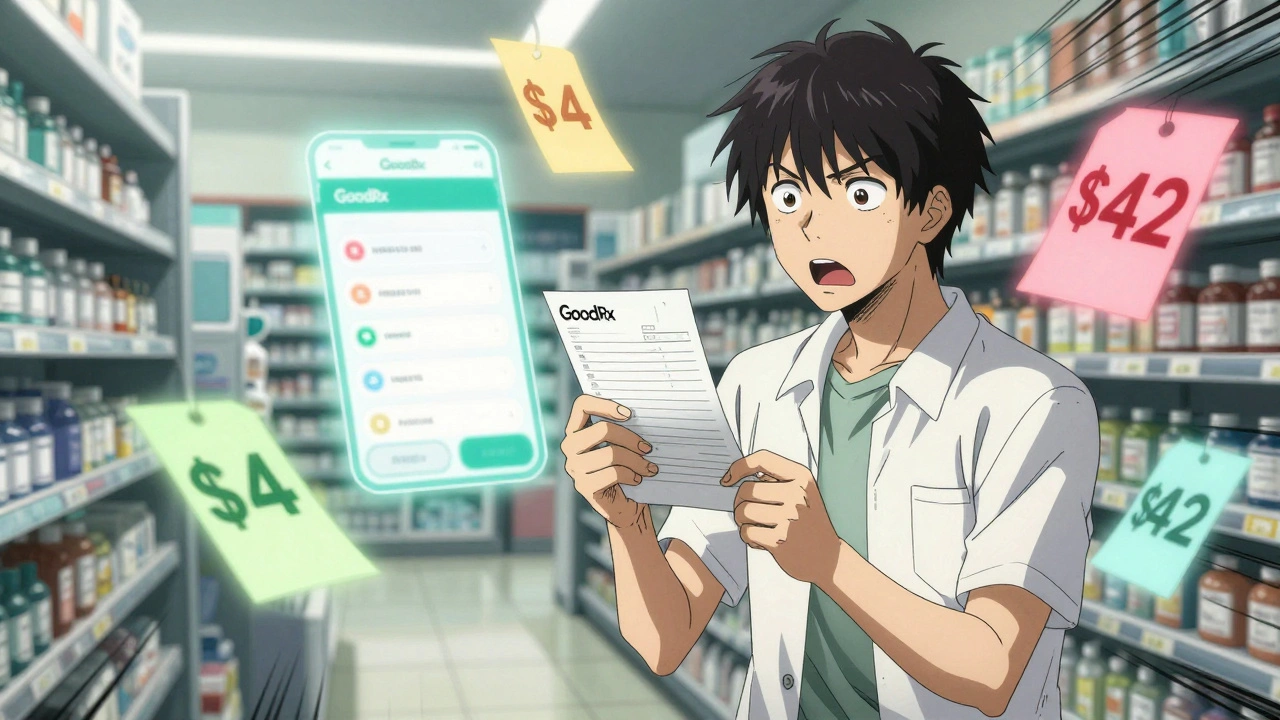
Have you ever filled a prescription and been shocked by the price-only to find out later that the same drug costs $15 less just down the street? You’re not alone. In the U.S., generic medications can vary wildly in price, even within the same city. A 30-day supply of metformin might cost $4 at one pharmacy and $42 at another. Why? Because the system is broken. List prices don’t reflect what you actually pay. Rebates, insurance deals, and pharmacy contracts hide the real cost. But there are tools now that can cut through the noise and show you the best price for your meds-before you pay.
Why Generic Drug Prices Are So Confusing
Generic drugs are supposed to be cheaper. They’re the same active ingredients as brand-name drugs, just without the marketing. But here’s the catch: the price you see at the counter isn’t the real price. What you pay depends on your insurance, your pharmacy, your state, and even the time of day. Pharmacy Benefit Managers (PBMs) negotiate secret deals with drug makers. These rebates don’t go to you-they go to the insurer or the PBM. That’s why two people with the same insurance can pay different amounts for the same pill. The wholesale acquisition cost (WAC) is what pharmacies pay manufacturers. But that number is meaningless to you. The net price after rebates? That’s hidden. And even if you have insurance, your copay might be higher than the cash price. In fact, a 2025 study found that 38% of patients paid more with insurance than they would have if they paid out-of-pocket for a generic drug.Real-Time Benefit Tools (RTBTs) - For Doctors and Clinics
If you’re a patient, you probably won’t use this tool directly. But your doctor might. Real-Time Benefit Tools (RTBTs) are integrated into electronic health records like Epic and Cerner. When your doctor writes a prescription, the system checks your insurance plan and shows you the exact out-of-pocket cost for each available option-including generics, alternatives, and even patient assistance programs. CoverMyMeds and Surescripts are the two biggest players. CoverMyMeds connects with over 450,000 practice locations. In 2025, 42% of U.S. physician offices used RTBTs-up from just 15% in 2022. These tools don’t just show price. They show you if a cheaper generic exists, if a prior authorization is needed, or if you qualify for free medication through a manufacturer program. One doctor in Ohio reported that after using RTBT, his patients’ out-of-pocket costs dropped by 37% on average. Why? Because he could switch them from a $120 brand-name drug to a $5 generic-without losing effectiveness. But here’s the problem: not all practices use it. And even when they do, the data isn’t always up to date. Formularies change daily. If your insurance adds a new tier or drops a drug, the tool might not know yet.GoodRx and Other Consumer Apps - For You
If you’re not in a doctor’s office right now, you can still find the best price. GoodRx is the most popular app for this. It scans prices at over 70,000 pharmacies across the U.S. and shows you coupons that can cut your bill by 80%. In 2024, 43% of U.S. pharmacies accepted GoodRx discounts. But it’s not perfect. A user on Trustpilot in March 2025 reported going to a pharmacy that advertised a $4 price on GoodRx-only to be told their system showed $15. Why? Because GoodRx negotiates cash prices with pharmacies. If the pharmacy’s internal pricing system doesn’t match, you’re stuck. Some pharmacies honor the coupon. Others don’t. It’s hit or miss. Other apps like SingleCare, RxSaver, and Blink Health work similarly. They’re free. You search your drug, pick a pharmacy, and show the coupon at checkout. Some even offer mail-order delivery. For a 30-day supply of lisinopril, you might pay $3 with GoodRx, $5 with SingleCare, and $12 at your local pharmacy without a coupon.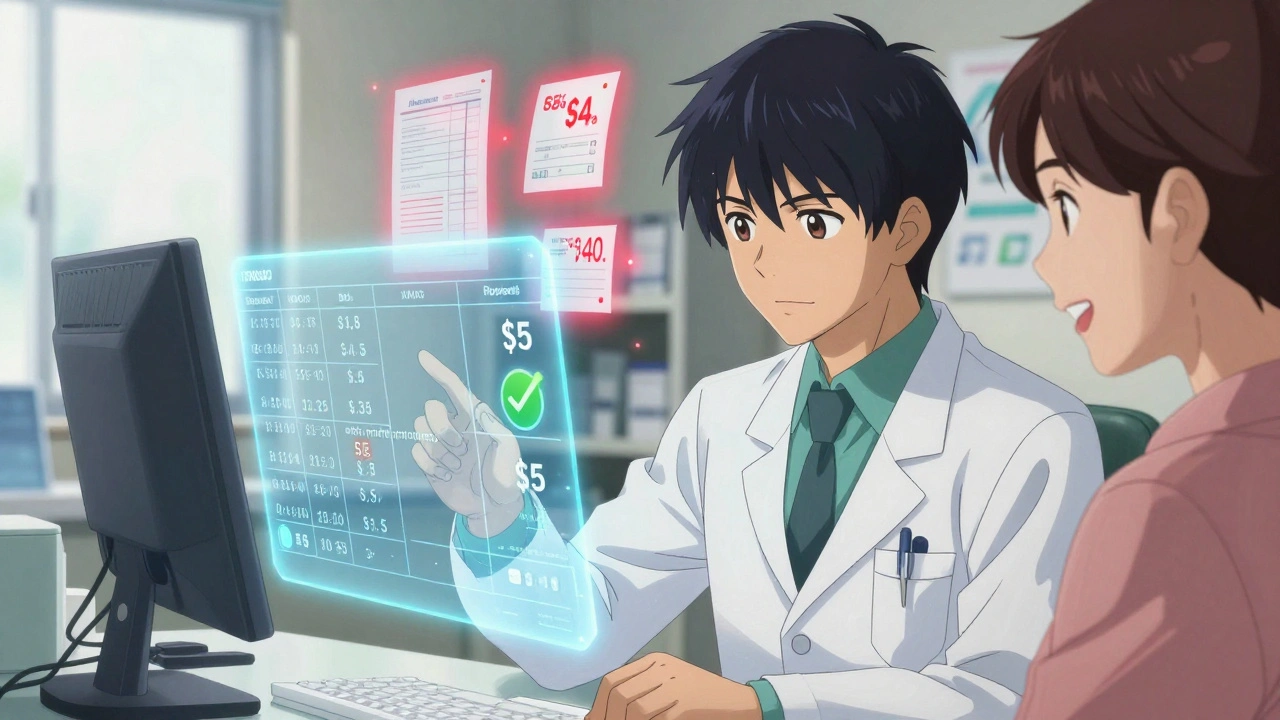
State Laws Are Changing the Game
In 2025, 23 states had passed their own drug price transparency laws. California requires drugmakers to report price hikes over 16% in two years. Minnesota went further: they created a Prescription Drug Affordability Board that can cap prices for certain drugs. In one case, a Minnesota patient used the state’s transparency portal and found a $287 annual savings by switching pharmacies for the same generic medication. Some states now require pharmacies to post cash prices online. Others force PBMs to report how much they’re actually paying for drugs-not just the list price. These laws are slow to roll out, but they’re forcing more openness. The federal government tried to push transparency too, with the Prescription Drug File rule in 2020. But enforcement has been patchy. And in March 2025, the Medicare Two Dollar Drug List Model was canceled-removing a major federal effort to cap prices.What You Can Do Right Now
You don’t need to wait for a law to change. Here’s what works today:- Always ask: "What’s the cash price?" before you pay. Sometimes it’s cheaper than your insurance copay.
- Use GoodRx or SingleCare. Download the app. Search your drug. Compare prices at 3 nearby pharmacies.
- Check if your drug is on your insurer’s formulary. Log into your plan’s website and search for your medication.
- Ask your doctor for alternatives. Sometimes a different generic version costs half as much.
- Look into patient assistance programs. RxAssist.org lists free or low-cost drugs from manufacturers. Over 1.2 million people used these programs in 2024.
- Call your pharmacy. Ask if they have a discount program. Some chains offer $4 generics for common meds.
The Hidden Problem: Rebates Still Control Prices
Here’s the uncomfortable truth: even with all these tools, you’re still not seeing the full picture. The real cost of a drug-the net price after rebates-is still secret. PBMs get paid based on how much they save insurers. That means they push drugs with the biggest rebates, not the cheapest ones. A drug might cost $10 to make but get a $20 rebate. The PBM makes more money if it’s prescribed, even if a $5 generic exists. That’s why some experts say price transparency alone won’t fix the system. If the incentives are still broken, tools will only show you the best price among bad options. The Federal Trade Commission warned that full transparency could actually raise prices by making rebates more visible and harder to hide. But that doesn’t mean you should give up. You’re still better off using these tools than paying whatever the counter says. Every dollar saved is a dollar you keep.What’s Coming Next
In January 2025, the Drug-price Transparency for Consumers Act (S.229) was introduced in the Senate. If passed, it would require drug companies to show the wholesale price in TV and print ads. That means you’d see “$120 for a 30-day supply” right in the commercial. It’s a small step-but it’s a step toward honesty. Meanwhile, more pharmacies are starting to display cash prices on their websites. More insurers are allowing patients to compare drug costs before they fill a prescription. The market for price transparency tools is growing fast-projected to hit nearly $5 billion by 2029. You don’t need to understand the entire system to benefit from it. You just need to know that you have power. You can ask. You can compare. You can walk away.Why is the same generic drug so expensive at my pharmacy?
The price you pay depends on your insurance plan, the pharmacy’s contract with your insurer, and secret rebates negotiated by Pharmacy Benefit Managers (PBMs). The listed price is often inflated. The real cost-what the pharmacy actually receives after rebates-is hidden. Cash prices can be much lower than your insurance copay. Always ask for the cash price before paying.
Can I use GoodRx even if I have insurance?
Yes. GoodRx shows cash prices, which are often cheaper than your insurance copay, especially for generics. You can choose to use GoodRx instead of your insurance. Just tell the pharmacist you’re paying cash with a GoodRx coupon. Your insurance won’t be billed. This works for most prescriptions, but not all. Check with your pharmacist if you’re unsure.
Are generic drugs as effective as brand-name ones?
Yes. The FDA requires generic drugs to have the same active ingredients, strength, dosage form, and route of administration as the brand-name version. They must also meet the same quality and safety standards. The only differences are in inactive ingredients like fillers or dyes, which don’t affect how the drug works. Generics save patients billions each year-without sacrificing effectiveness.
How do I know if a price I see online is accurate?
Online prices are estimates. Always call the pharmacy before you go. Some pharmacies honor the coupon, others don’t. Prices can change daily based on inventory, location, or insurance contracts. The best practice: check 2-3 apps (GoodRx, SingleCare, RxSaver), pick the lowest, then call the pharmacy to confirm they’ll honor it. Avoid going to a pharmacy based on a single app price.
What if I can’t afford my medication even with discounts?
Many drug manufacturers offer free or low-cost programs for people who qualify. RxAssist.org is a free, nonprofit site that lists these programs. You can also ask your doctor-they often have samples or know about patient assistance programs. Some states have drug affordability boards that can help. Don’t skip your meds because of cost. There are options.




Comments
Vincent Soldja
December 2, 2025 AT 05:47Price transparency tools are nice in theory but the system's still rigged. I've used GoodRx and got slapped with 'coupon not valid' three times in a row. The pharmacy just doesn't care. Why should they? They're not the ones losing money.
Makenzie Keely
December 3, 2025 AT 04:37Let me tell you-this is life-changing! I used to pay $130 for my blood pressure med-now, with SingleCare, I pay $4.99. I didn’t even know this was possible! I’ve told my mom, my sister, my book club, my yoga instructor-everyone! You don’t need a PhD to save money-you just need to ask. And yes, it’s that simple. Please, please, please-don’t let fear or apathy cost you your health. You deserve better. And you can do this!
Francine Phillips
December 3, 2025 AT 17:16Been there. Paid too much. Now I just call the pharmacy first. Works most of the time. Sometimes the cash price is half the insurance copay. No magic apps needed.
Katherine Gianelli
December 5, 2025 AT 01:43I know how scary it feels when you’re choosing between meds and groceries. I’ve been there. I remember crying in the pharmacy aisle because I couldn’t afford my insulin. But then I found RxAssist.org. Someone helped me apply for free medication. It didn’t fix everything-but it gave me breathing room. If you’re struggling-you’re not alone. There are people who want to help. Reach out. Ask your pharmacist. Ask your doctor. Say ‘I can’t afford this.’ Say it out loud. It’s not weak. It’s brave. And you deserve to be healthy.
Joykrishna Banerjee
December 5, 2025 AT 08:58Typical American consumerist delusion. You think a coupon app fixes structural market failures? The entire PBM-industrial complex is a rent-seeking oligopoly. You’re optimizing within a broken paradigm. Real solution: single-payer. Or at least abolish rebates. Until then, your GoodRx hustle is just a placebo for systemic rot. #CapitalismIsTheProblem 😒
Myson Jones
December 5, 2025 AT 22:26It’s worth noting that many of these tools rely on outdated formulary data. I’ve had cases where the app showed a $3 price, but the pharmacy’s internal system hadn’t updated since last week. Always confirm with the pharmacist. It’s not a waste of time-it’s due diligence.
parth pandya
December 6, 2025 AT 20:02goodrx is great but sometimes the price dont match. i think its because the pharamcy has diffrent pricing for ins and cash. i used it for metformin and got charged 18$ even though app said 4$. maybe the coupon was expired or somthing. i wud suggest call before u go
James Kerr
December 7, 2025 AT 14:32Just tried GoodRx for my thyroid med. Saved me $50. No cap. No drama. Just walked in, showed the coupon, paid $3.50. Life’s too short to overpay for pills. Do the 2-minute search. You’ll thank yourself later. 😎
shalini vaishnav
December 9, 2025 AT 03:45Why do Americans need apps to find cheap medicine? In India, generics are sold openly at 1/10th the price-no coupons, no apps, no bureaucracy. You walk in, ask for the generic, pay cash, leave. Simple. This whole system is a joke. You’ve been sold a lie that complexity equals progress.
vinoth kumar
December 10, 2025 AT 14:02Love this thread. I’ve been using RxSaver for my cholesterol meds and it’s cut my bill in half. I even showed my cousin how to use it-she was skeptical but now she’s hooked. Small wins matter. Keep sharing this stuff. We’re all in this together.
bobby chandra
December 10, 2025 AT 23:33Let’s be real-this isn’t about coupons. It’s about reclaiming agency. The system wants you passive, confused, and compliant. But you? You’re not just a patient-you’re a savvy consumer. You’re not asking for charity. You’re demanding fairness. And when you use these tools? You’re not just saving money-you’re dismantling the myth that healthcare has to be this broken. Every dollar you save is a middle finger to the middlemen. Keep going. The tide is turning.