
Post-Market Surveillance: How the FDA Monitors Generic Drugs After Approval

When you pick up a generic pill at the pharmacy, you expect it to work just like the brand-name version. But how does the FDA make sure it still does-months or years after it hits the shelf? The truth is, approval isn’t the end of the story. It’s just the beginning.
Why Generic Drugs Need Ongoing Monitoring
Generic drugs make up about 90% of all prescriptions filled in the U.S. That’s over 4 billion prescriptions a year. Unlike brand-name drugs, which go through years of clinical trials with thousands of patients, generics only need to prove they’re bioequivalent to the original. That means they deliver the same amount of active ingredient into the bloodstream at the same rate. But bioequivalence doesn’t guarantee identical performance in every patient, every time.Think of it like two identical-looking cars. They might have the same engine specs, but if one has a slightly different fuel injector or a different type of rubber in the tires, performance can vary under real-world conditions. The same applies to pills. A change in inactive ingredients-like fillers or coatings-can affect how a drug dissolves in the body. For simple pills, that’s rarely a problem. But for complex generics-like inhalers, extended-release capsules, or topical creams-those tiny differences can matter.
The FDA knows this. That’s why they don’t just approve generics and walk away. They watch. Closely.
The Tools the FDA Uses to Watch Generic Drugs
The FDA doesn’t rely on guesswork. They use three major systems to track what’s happening after a generic drug is sold:- FAERS (FDA Adverse Event Reporting System): This is the largest database of patient and doctor reports about side effects, medication errors, or unexpected outcomes. Anyone-patients, pharmacists, doctors-can submit a report through MedWatch. In 2023 alone, over 2 million reports came in, and about 15% involved generic drugs. The FDA’s team of epidemiologists and safety analysts sift through these reports looking for patterns. If 20 people in different states report the same rare reaction after switching to a new generic version of a blood pressure pill, that’s a signal.
- Sentinel Initiative: This is the FDA’s real-time surveillance network. It pulls anonymized data from electronic health records and insurance claims across more than 200 million Americans. Instead of waiting for someone to report a problem, Sentinel can spot trends automatically. For example, if a new generic version of a diabetes drug suddenly shows a spike in hospital visits for low blood sugar, Sentinel flags it within weeks, not months.
- Unannounced Factory Inspections: The FDA doesn’t just check the drug’s effect on people-they check how it’s made. Inspectors show up at manufacturing sites without warning to make sure the generic drug is still being produced exactly as approved. A single batch of pills with inconsistent dissolution rates can trigger a recall.
These systems work together. FAERS catches what patients notice. Sentinel finds what doctors might miss. Inspections ensure the product hasn’t changed behind the scenes.
Complex Generics Are the Biggest Challenge
Not all generics are created equal. Simple tablets are easy to replicate. But what about an inhaler that delivers medicine deep into the lungs? Or a cream that needs to penetrate skin at a specific rate? These are called complex generics, and they’re where the system gets stretched thin.For these drugs, bioequivalence studies often can’t predict real-world outcomes. A 2021 report from the National Academies found that patients using generic asthma inhalers sometimes report worse control-even when lab tests say the drug levels are the same. Why? Maybe the propellant, the nozzle design, or the particle size differs just enough to change how the medicine reaches the lungs.
The FDA has responded by launching new research. In 2020, they funded the Center for Research on Complex Generics, a partnership with the Universities of Maryland and Michigan. They’re studying how to better test these products before they’re approved. But even more important: they’re building tools to monitor them after they’re sold.
AI and Machine Learning Are Changing the Game
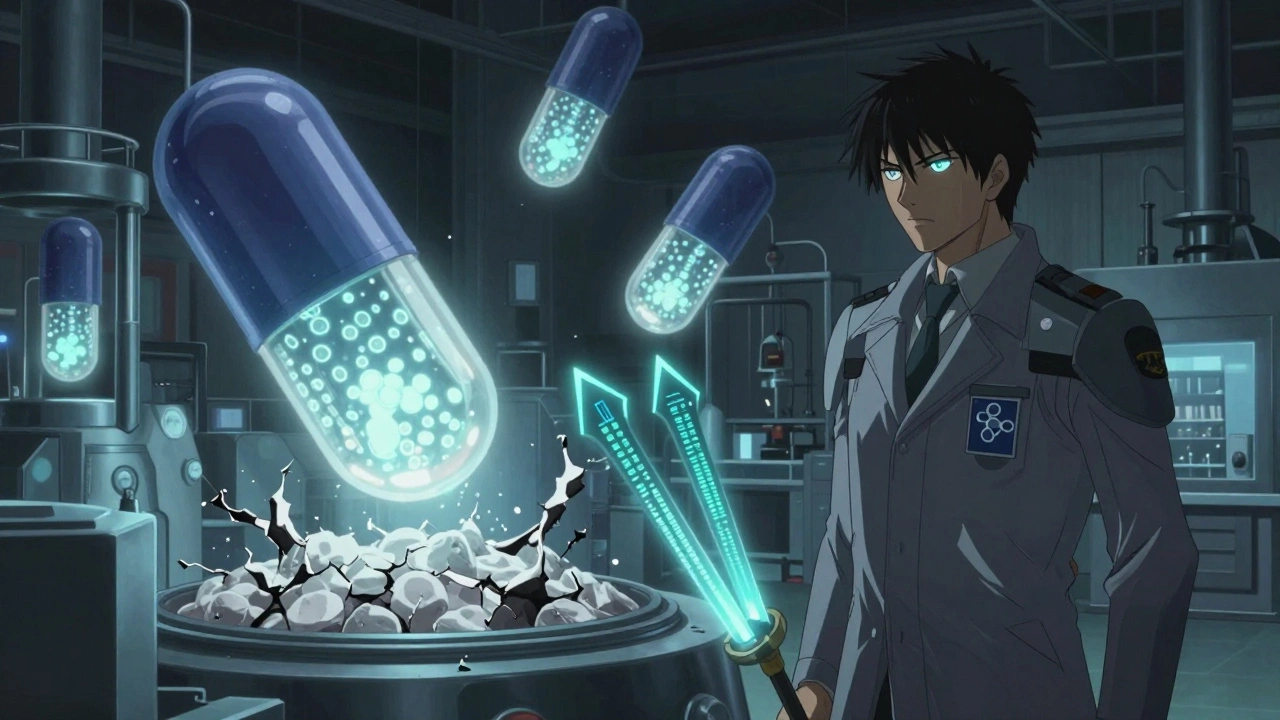
The old way of watching drugs-waiting for people to report side effects-is slow. It can take months to spot a pattern. The FDA is now investing in artificial intelligence to speed things up.In 2023, they allocated $5.2 million specifically to develop AI models that can analyze millions of electronic health records and FAERS reports to find hidden connections. One project is training algorithms to compare outcomes between brand-name drugs and their generic versions in real time. The goal? To detect safety signals in weeks instead of months.
Early results are promising. A 2022 McKinsey report estimated AI could cut signal detection time by up to 70% for complex generics. That’s huge. Imagine catching a rise in kidney problems linked to a specific generic version of a blood pressure drug before it affects thousands of patients.
But AI isn’t magic. It needs good data. And right now, one big problem is that many reports don’t include the manufacturer’s name. If 10 different companies make the same generic drug, and a patient just writes “lisinopril,” the FDA can’t tell which one caused the issue. That’s why they’re pushing pharmacies and prescribers to record the exact brand name of the generic dispensed.
What Happens When a Problem Is Found?
Finding a problem is only step one. What the FDA does next matters.If a pattern emerges-say, a specific generic version of a seizure medication is linked to more breakthrough seizures-the FDA has several options:
- They can ask the manufacturer to update the drug’s label with new warnings.
- They can issue a “Dear Healthcare Provider” letter, alerting doctors to watch for certain side effects.
- In serious cases, they can request a voluntary recall.
- If the drug is consistently unsafe, they can revoke its approval.
One real example: In 2019, the FDA flagged a generic version of a heart medication that was dissolving too slowly. Patients weren’t getting enough of the drug into their bloodstream. The manufacturer recalled the batch, and the FDA updated testing requirements for all similar products.
These actions don’t happen often-but when they do, they’re based on hard data, not fear or rumors.

The Human Factor: Perception Can Be as Powerful as Chemistry
Here’s something surprising: sometimes, the problem isn’t the drug at all-it’s the patient’s belief.Studies show that when people switch from a brand-name drug to a generic, some report side effects or reduced effectiveness-even when blood tests prove the drug levels are identical. This is called the nocebo effect. It’s the opposite of the placebo effect. Instead of feeling better because they believe a pill will work, they feel worse because they believe the generic won’t.
One 2019 study in JAMA Internal Medicine found that 15% of adverse event reports for generics mentioned “it doesn’t work like the brand.” But when researchers looked at clinical data, there was no measurable difference in outcomes. The drug worked. But the perception didn’t.
This makes surveillance harder. How do you tell if a report is about a real chemical issue-or a psychological one? The FDA trains its analysts to look for patterns across multiple reports. If only one person says their generic blood pressure pill “feels different,” it’s likely noise. If 50 people report the same thing, and it’s tied to one manufacturer’s product, that’s a signal.
What’s Next for Generic Drug Safety?
The FDA’s surveillance system is evolving. Here’s what’s coming:- More real-time data: The Sentinel network will soon include more electronic health records from hospitals and clinics, giving a fuller picture of how generics perform in sicker, older, or more complex patients.
- Product-specific monitoring: Instead of treating all generics the same, the FDA is developing tailored surveillance plans for different drug types-especially inhalers, injectables, and topical products.
- Clearer labeling: New requirements may force manufacturers to print their company name and lot number on the packaging, making it easier to trace problems.
- Public reporting: The FDA plans to make more safety data publicly available so patients and doctors can see which generics have the most reports and why.
By 2027, experts predict AI-driven systems will detect safety issues in complex generics 60-70% faster than today. That’s not just efficiency-it’s lives saved.
What You Can Do
You don’t have to wait for the FDA to act. If you switch to a generic and notice something different-new side effects, less relief, strange reactions-report it. Use MedWatch. Tell your doctor. Write down the manufacturer’s name and lot number if you can.Every report helps. The system only works if people speak up.
Are generic drugs as safe as brand-name drugs?
Yes, generic drugs are required by law to be as safe and effective as their brand-name counterparts. They must meet the same strict standards for purity, strength, and quality. The FDA approves them only after proving they’re bioequivalent. But because generics can have different inactive ingredients, rare differences in how the drug behaves in the body can occur-especially with complex formulations. That’s why ongoing monitoring is critical.
How does the FDA know if a generic drug is causing problems?
The FDA uses multiple systems: FAERS collects reports from patients and doctors; Sentinel analyzes real-world health data from millions of people; and inspections check manufacturing quality. When a pattern emerges-like a spike in reports tied to one manufacturer’s product-the FDA investigates further. They don’t rely on single reports; they look for trends across time, location, and patient groups.
Can a generic drug be pulled from the market?
Yes. If the FDA finds consistent evidence that a generic drug is unsafe, ineffective, or poorly manufactured, they can require a recall or revoke its approval. This has happened multiple times-for example, when a generic version of a heart medication was found to dissolve too slowly, putting patients at risk. The FDA acts quickly when data shows a clear danger.
Why do some people say generics don’t work as well?
Sometimes, it’s not the drug-it’s perception. Studies show patients who believe generics are inferior may experience worse outcomes, even when the drug is chemically identical. This is called the nocebo effect. But in other cases, especially with complex drugs like inhalers or extended-release pills, minor formulation differences can affect how the drug is absorbed. That’s why the FDA is improving surveillance for these products.
What’s being done to improve generic drug monitoring?
The FDA is investing in AI and machine learning to analyze real-world data faster, creating product-specific surveillance plans for complex generics, and pushing for better labeling that includes manufacturer names and lot numbers. They’re also expanding the Sentinel Initiative to cover more than 200 million Americans. These changes aim to catch safety issues weeks, not months, after they start.
Comments
olive ashley
December 6, 2025 AT 04:09So let me get this straight - the FDA ‘monitors’ generics by waiting for people to die or have seizures before they do anything? And you call that ‘surveillance’? They’re not monitoring - they’re just collecting graveyard data. I’ve seen people switch to generics and go from stable to hallucinating. No one reports it because they think it’s ‘in their head.’ The system is broken, and they know it.
Dan Cole
December 8, 2025 AT 01:26You misunderstand the fundamental flaw here: bioequivalence is a mathematical fiction masquerading as science. Two drugs can have identical AUC and Cmax values and still behave like oil and water in vivo. The FDA’s entire regulatory framework for generics is built on the assumption that biology is linear - it’s not. It’s chaotic. And yet we hand out billions of prescriptions based on a single lab test from a 28-year-old male in a controlled environment. This isn’t medicine - it’s pharmaceutical roulette.
Billy Schimmel
December 9, 2025 AT 00:39Yeah, but honestly? I’ve been on generic lisinopril for 5 years. Same dose. Same results. My blood pressure’s perfect. Maybe the scary stories are real for some - but for most of us? It’s just the same pill, cheaper. Don’t let fear sell you a brand-name bill.
Inna Borovik
December 10, 2025 AT 04:19FAERS is garbage. Over 80% of those reports are incomplete, unverified, and submitted by people who don’t know what ‘dose’ means. The FDA’s entire system is drowning in noise. They need to require mandatory manufacturer tagging on every prescription - no exceptions. Otherwise, you’re chasing ghosts. And AI? Don’t get me started. Algorithms trained on bad data just make bad predictions faster.
Rashmi Gupta
December 11, 2025 AT 01:33Why does the FDA even bother? In India, we make generics that save millions - and no one’s running around with a clipboard watching every pill. You Americans treat medicine like a luxury product. Meanwhile, real people in Bangladesh are alive because of a $0.10 tablet you’d never touch.
Andrew Frazier
December 12, 2025 AT 14:11So the FDA lets some Chinese factory make my heart med and then says ‘lol good luck’? And you wonder why our healthcare’s a mess? We used to make stuff here. Now we’re a nation of data-entry clerks watching pills dissolve in some lab in Mumbai. Wake up, America. This isn’t science - it’s surrender.
Mayur Panchamia
December 13, 2025 AT 21:53HAHAHAHA! The FDA has AI now?!!?!!? And you think that will fix the fact that 80% of generics are made in factories where the inspectors get paid in chai and prayers?!?!!? I’ve seen the labs - no gloves, no clean rooms, just guys smoking while they press pills. You think AI can detect that? No. Only a man with a flashlight and a gun can. But you? You’ll keep buying the $4 pill and crying when it doesn’t work.
Karen Mitchell
December 14, 2025 AT 04:12It is deeply concerning that the regulatory apparatus of the United States has devolved into a reactive, post-hoc surveillance model predicated upon anecdotal evidence and algorithmic speculation. The foundational principle of pharmaceutical equivalence has been compromised by cost-driven deregulation, and the resultant erosion of public trust is not merely a statistical anomaly - it is a moral failure.
Nava Jothy
December 16, 2025 AT 00:25Ugh. I just switched to a generic and now I feel like I’m slowly turning into a zombie. 😭 I KNOW it’s all in my head… but also… what if it’s NOT?? 😭 The FDA is literally playing Russian roulette with our lives and no one cares. I’m crying. I’m so scared. Someone please help me. 💔