
Lithium Interactions: NSAIDs, Diuretics, and Dehydration Risks

Lithium is one of the oldest and most effective mood stabilizers for bipolar disorder. But it’s also one of the most dangerous if not managed carefully. A small change in your body-like taking a common painkiller, starting a water pill, or even skipping a few glasses of water-can push lithium levels into the toxic range. And that’s not theoretical. People have ended up in the hospital, or worse, because of these interactions.
Why Lithium Is So Sensitive
Lithium doesn’t break down in your body. It’s filtered out by your kidneys and excreted in urine. About 95% of it leaves your system unchanged. That means anything that affects your kidneys or your fluid balance directly affects how much lithium stays in your blood.The safe range is tiny: between 0.6 and 1.2 mmol/L. Go above that, and you risk toxicity. Go below, and your mood may not be controlled. There’s no room for guesswork. This is why even small changes-like starting a new medication or getting sick-can be dangerous.
Older adults are especially at risk. People over 65 are more than three times as likely to experience lithium toxicity. That’s because kidney function naturally declines with age. If you’re also taking other medications or have heart or kidney problems, your risk goes up even more.
NSAIDs: The Silent Lithium Boosters
Non-steroidal anti-inflammatory drugs (NSAIDs) are everywhere. Ibuprofen. Naproxen. Celecoxib. Even aspirin, in high doses. They’re used for headaches, arthritis, menstrual cramps-everything.But here’s the problem: NSAIDs reduce blood flow to the kidneys by blocking prostaglandins. That slows down how fast your kidneys clear lithium. The result? Lithium builds up in your blood.
The increase isn’t small. Indomethacin can raise lithium levels by 30-60%. Ibuprofen? 25-40%. Celecoxib? Still 15-30%. And it doesn’t take long. Toxicity can show up within a week of starting an NSAID.
One fatal case in New Zealand involved a 72-year-old woman taking lithium, an ACE inhibitor, and an NSAID. Her lithium levels weren’t checked regularly after she started the painkiller. She died from toxicity. That wasn’t an accident. It was a preventable mistake.
There’s no safe NSAID if you’re on lithium. Even occasional use can be risky. The best advice? Avoid them completely. If you must use one-say, for a bad back flare-up-talk to your doctor first. Use the lowest dose for the shortest time possible. And get your lithium level checked within 7-10 days.
Diuretics: Water Pills That Can Sink You
Diuretics, or water pills, are prescribed for high blood pressure, heart failure, or swelling. But they’re a major red flag for lithium users.Thiazide diuretics-like hydrochlorothiazide-are the worst offenders. They can spike lithium levels by 25-50% within 10 days. Why? They make your kidneys reabsorb more sodium-and lithium rides along with it. Your body thinks it’s saving salt, but it’s accidentally holding onto lithium too.
Loop diuretics like furosemide (frusemide) are less risky, but still dangerous. They can raise lithium levels by 10-25%. Potassium-sparing diuretics like spironolactone? The data is mixed. Some studies show a rise, others don’t. Better to assume risk.
There’s one twist: some diuretics actually lower lithium levels. Osmotic diuretics like mannitol and carbonic anhydrase inhibitors like acetazolamide increase urine output in a way that flushes lithium out. That’s not a good thing either. It can make your mood unstable.
Herbal diuretics? Don’t be fooled. Weight-loss teas, supplements labeled “natural detox,” or even dandelion root pills can cause dangerous lithium spikes. They’re not regulated. They don’t come with warnings. And they can dehydrate you just like prescription diuretics.
Dehydration: The Hidden Trigger
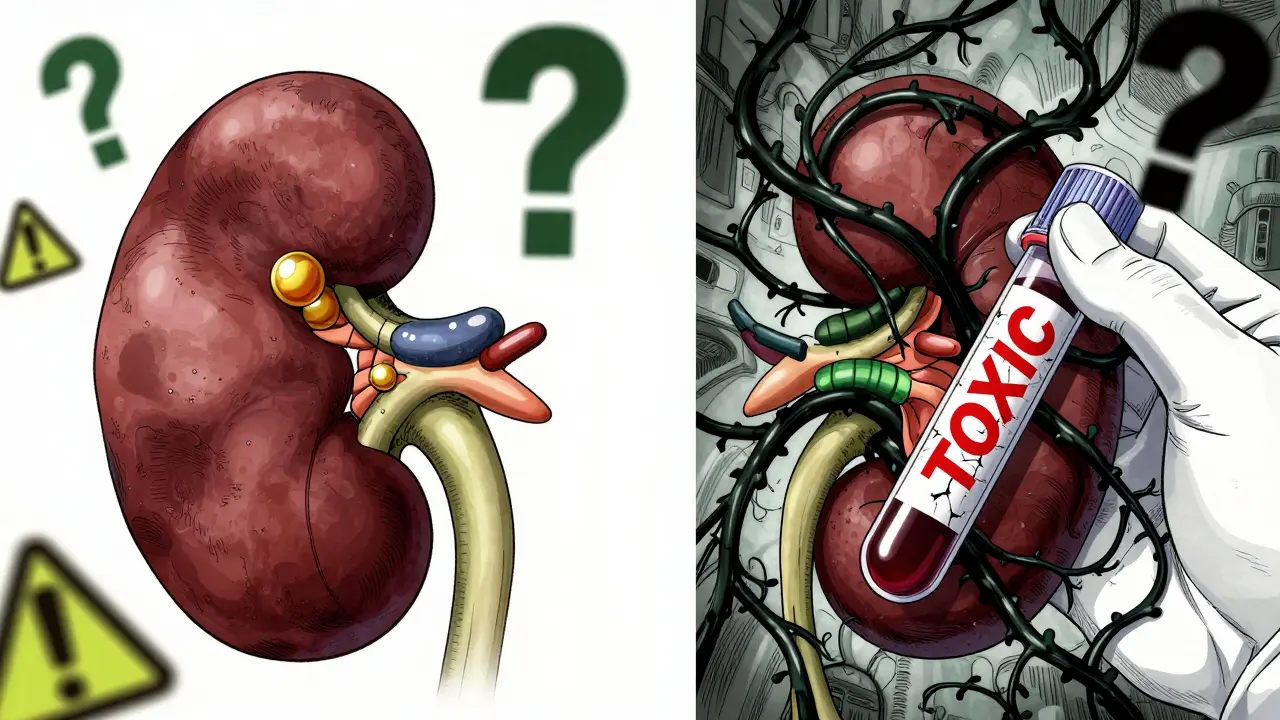
You don’t need a drug interaction to trigger lithium toxicity. Sometimes, it’s just not drinking enough water.Lithium levels rise when your blood gets more concentrated. That happens when you lose fluids-through sweat, fever, vomiting, or diarrhea. Even a 2-3% drop in body weight from dehydration can increase lithium levels by 15-25%.
Think about this: You’re traveling overseas. It’s hot. You get sick with the stomach flu. You’re not eating, not drinking much, and you’re sweating. You’re still taking your lithium. That’s a perfect storm.
Same thing happens after intense exercise, long flights, or even just spending a day in the sun without enough fluids. People in tropical climates, like parts of Australia, are especially vulnerable. That’s why doctors warn lithium patients to keep drinking water-even if they don’t feel thirsty.
And it’s not just water. Salt matters too. Eating less salt-like on a low-sodium diet-can cause lithium levels to rise. Eating more salt can lower them. A change of just 20-30 mmol of sodium per day can shift lithium levels by 10-20%. That’s why consistency is key. Don’t suddenly cut back on salt or go on a cleanse. Keep your diet steady.
Symptoms of Lithium Toxicity: Don’t Wait
Toxicity doesn’t always come with a siren. Early signs are easy to miss:- Diarrhea (68% of early cases)
- Lightheadedness or dizziness (52%)
- Drowsiness or fatigue (47%)
- Tremors in your hands
- Nausea or vomiting
If you ignore these, it gets worse:
- Blurred vision (31%)
- Ringing in the ears (tinnitus, 29%)
- Muscle weakness or twitching
- Confusion or slurred speech
- Seizures or coma (in severe cases)
Once you reach this stage, you need emergency treatment. And even if you survive, kidney damage can be permanent-especially if you’re older or already have kidney issues.
What You Should Do
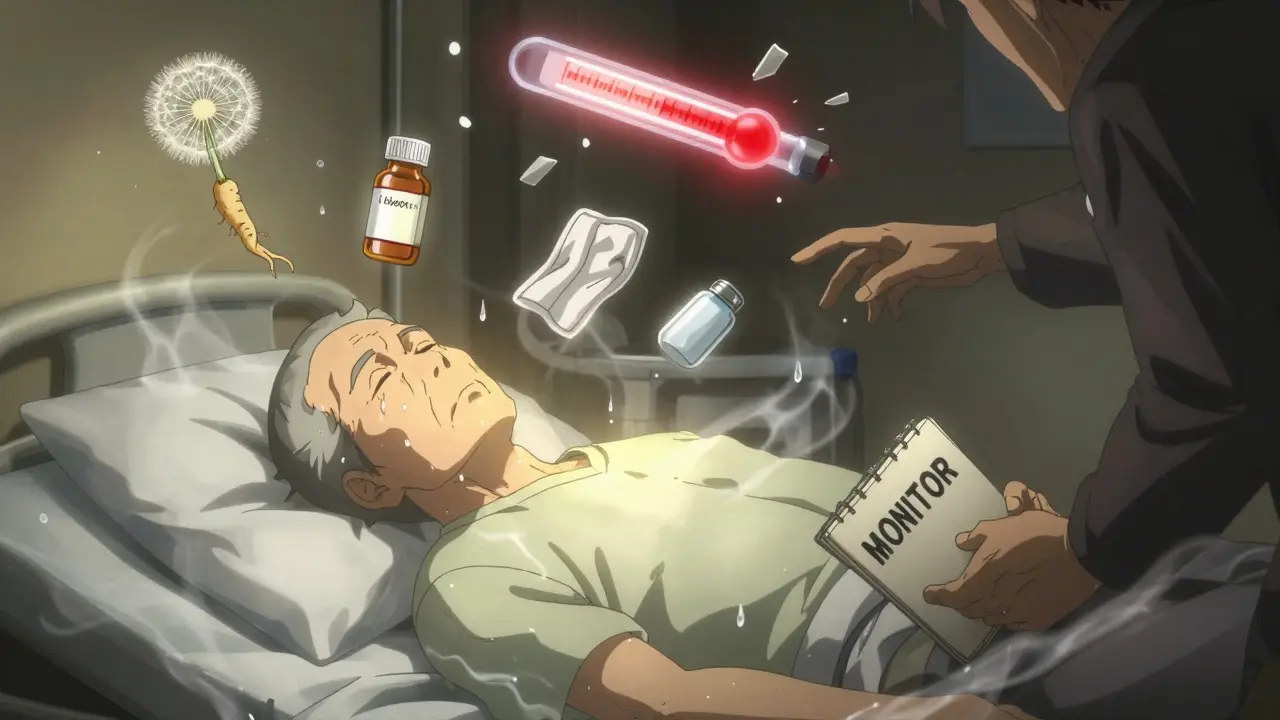
If you’re on lithium, here’s what actually works:- Avoid NSAIDs. Use acetaminophen (paracetamol) for pain instead. It doesn’t interfere with lithium.
- Don’t start diuretics without talking to your doctor. If you need one for blood pressure, your doctor might switch you to a different class of medication, like an ARB or calcium channel blocker.
- Drink water daily. Aim for 1.5-2 liters unless your doctor says otherwise. Keep a bottle with you. Set reminders if you forget.
- Keep your salt intake consistent. Don’t go on extreme low-salt diets. Don’t suddenly eat a lot of salty food. Balance matters.
- Get your lithium levels checked regularly. At least every 3-6 months. More often if you’re over 65, have kidney problems, or start a new medication.
- Call your doctor immediately if you get sick with vomiting, diarrhea, or fever. Don’t wait. Get tested.
- Check all supplements. Many herbal products contain diuretics or affect kidney function. Always tell your prescriber what you’re taking.
Monitoring Is Non-Negotiable
Guidelines from Australia, New Zealand, and the UK all say the same thing: monitor lithium levels closely after any change.If you start an NSAID or diuretic, check your lithium level within 7-10 days-and again at 2-4 weeks. Keep checking every few weeks until it stabilizes. Some doctors recommend weekly checks for the first month.
And don’t assume your doctor will catch it. Electronic systems flag these interactions, but many still miss them. That 72-year-old woman in New Zealand? Her system flagged the interaction. But no one followed up. That’s why you have to be your own advocate.
If you’re on long-term lithium, ask for a shared care plan with a renal specialist or psychiatrist. They’ll know how to adjust your dose and monitor your kidney function properly.
The Bottom Line
Lithium works. It saves lives. But it doesn’t forgive mistakes.NSAIDs, diuretics, and dehydration aren’t just “possible” risks. They’re proven, common, and deadly. The data is clear. The warnings are out there. The problem isn’t lack of knowledge-it’s lack of action.
If you’re on lithium, treat your body like a precision instrument. Small changes matter. Stay hydrated. Avoid unnecessary meds. Keep your salt steady. Get your levels checked. And never assume someone else is watching out for you.
Your mood stability depends on it.
Can I take ibuprofen while on lithium?
It’s not recommended. Ibuprofen can increase lithium levels by 25-40%, raising your risk of toxicity. If you need pain relief, use acetaminophen (paracetamol) instead. If you must take ibuprofen, do so only for a few days under your doctor’s supervision and get your lithium level checked within a week.
What diuretics are safe with lithium?
No diuretic is completely safe with lithium. Thiazides like hydrochlorothiazide are the most dangerous, raising levels by 25-50%. Loop diuretics like furosemide are less risky but still dangerous. Potassium-sparing diuretics have unclear effects. If you need a diuretic, your doctor may switch you to a different blood pressure medication, like an ARB or calcium channel blocker, which don’t interfere with lithium.
How much water should I drink on lithium?
Aim for 1.5 to 2 liters of water per day, unless your doctor advises otherwise. In hot weather, during illness, or after exercise, drink even more. Dehydration-even mild-can raise lithium levels by 15-25%. Don’t wait until you’re thirsty. Sip water consistently throughout the day.
Can I change my salt intake while on lithium?
Avoid sudden changes. Eating less salt increases lithium levels. Eating more salt lowers them. A shift of 20-30 mmol of sodium per day can change your lithium level by 10-20%. Keep your diet consistent. Don’t go on low-sodium diets or binge on salty foods without telling your doctor.
What are the early signs of lithium toxicity?
Early signs include diarrhea (68% of cases), lightheadedness (52%), drowsiness (47%), hand tremors, nausea, and vomiting. These can be mistaken for the flu or stress. If you notice them while on lithium, get your blood tested immediately. Don’t wait for worse symptoms like confusion, blurred vision, or seizures.
Do herbal supplements interact with lithium?
Yes. Many weight-loss teas, detox supplements, and herbal diuretics contain ingredients like dandelion, green tea extract, or parsley that can cause dehydration or affect kidney function. These can raise lithium levels just like prescription diuretics. Always tell your doctor what supplements you’re taking-even if you think they’re "natural."
How often should lithium levels be checked?
If you’re stable, every 3-6 months is standard. But after starting a new medication like an NSAID or diuretic, check within 7-10 days, then again at 2-4 weeks. If you’re over 65, have kidney issues, or are on multiple interacting drugs, your doctor may want monthly checks. Always follow your provider’s schedule.
Can lithium toxicity cause permanent kidney damage?
Yes. Severe or repeated lithium toxicity can damage the kidneys permanently, especially in older adults or those with pre-existing kidney disease. This can lead to chronic kidney disease or reduced kidney function that lasts for life. Preventing toxicity through careful monitoring and avoiding interactions is the only way to protect your kidneys.
Is lithium still safe to take long-term?
Yes, if managed properly. Lithium remains one of the most effective treatments for bipolar disorder. Thousands of people take it safely for decades. The key is consistency: stable fluid and salt intake, avoiding interacting drugs, regular blood tests, and open communication with your doctor. Don’t let fear stop you-but don’t ignore the risks either.
What should I do if I think I have lithium toxicity?
Stop taking lithium and call your doctor or go to the emergency room immediately. Don’t wait. Tell them you’re on lithium and suspect toxicity. Blood tests can confirm levels, and treatment may include stopping lithium, IV fluids, and sometimes dialysis. Early action can prevent serious harm.




Comments
Matthew Hekmatniaz
January 1, 2026 AT 14:27I’ve been on lithium for 12 years now, and this post nailed it. I used to take ibuprofen for my back pain like it was candy-until I got dizzy and nauseous one morning and ended up in the ER. Turned out my lithium was at 1.8. Scared the hell out of me. Now I use Tylenol, drink water like it’s my job, and check my levels every 3 months. No drama. Just consistency.
Don’t let fear keep you off lithium-it’s life-changing if you treat it right.
Liam George
January 2, 2026 AT 00:46They don’t want you to know this, but lithium toxicity isn’t an accident-it’s a corporate design. Big Pharma pushes NSAIDs like they’re harmless while quietly knowing how many people will crash on lithium. The FDA? Complicit. The ‘safe range’? Arbitrary. They profit off your instability and then sell you the antidote.
And don’t get me started on ‘hydration.’ Water is a controlled substance in disguise. The government knows dehydration spikes lithium levels-and they let it happen so you’ll keep going back for more blood tests, more meds, more dependency.
Wake up. The system is rigged. Your kidneys are just another profit center.
Bill Medley
January 2, 2026 AT 11:46Acetaminophen is the only safe OTC analgesic for lithium patients. Avoid NSAIDs. Monitor levels after any new medication. Hydration and sodium stability are critical. Consult your prescriber before changing anything.
Simple. Evidence-based. Non-negotiable.
Richard Thomas
January 2, 2026 AT 19:39There’s something deeply human about how fragile this treatment is. We’re talking about a mineral-just lithium ions-holding together someone’s entire emotional world. And yet, the tiniest shift in fluid, in salt, in a pill you grab without thinking… it all unravels.
I think about how little control we really have over our biology. We’re told to be responsible, to drink water, to track our sodium, to avoid this, avoid that-but what if you’re tired? What if you’re traveling? What if you’re grieving and forget to eat? What if your kidneys are just… tired?
Lithium doesn’t care about your intentions. It only responds to chemistry. And that’s both terrifying and beautiful. It forces us into radical presence. To be in your body. To listen. To care. Not because you’re told to-but because if you don’t, you might not wake up.
I don’t know if that’s a treatment or a meditation.
But I know I’m alive because I learned to pay attention.
Andy Heinlein
January 4, 2026 AT 05:59OMG YES. I almost died last year bc I thought 'oh it's just a little ibuprofen' and then I felt like i was underwater. got to the er and they were like 'your lithium is sky high'. now i carry a water bottle everywhere. even in winter. even if i'm not thirsty. also no more detox teas lol. thanks for this post!
Ann Romine
January 5, 2026 AT 08:20I’m a nurse in a psych unit, and I’ve seen three lithium toxicity cases in the last year alone. All preventable. One patient was on hydrochlorothiazide for hypertension-no one told her it interacted. Another started taking turmeric supplements for 'inflammation.' Another just stopped drinking water during a heatwave.
People think lithium is 'old school' so it’s safe. It’s not. It’s a scalpel, not a hammer.
And the worst part? The patients who survive often don’t know why they got sick. They leave the hospital confused, scared, and still taking the same meds. We need better discharge education. And more awareness.
Todd Nickel
January 5, 2026 AT 10:36It’s worth noting that the pharmacokinetics of lithium are uniquely dependent on renal sodium handling, which is why thiazide diuretics are so problematic-they inhibit sodium reabsorption in the distal convoluted tubule, which triggers compensatory sodium (and lithium) reabsorption in the proximal tubule via the sodium-lithium countertransport system. This is why even low-dose thiazides can produce a 50% increase in serum lithium concentration within 7–10 days.
Loop diuretics, by contrast, act on the thick ascending limb and cause a more pronounced natriuresis, which reduces proximal tubular reabsorption, leading to a more modest lithium elevation. But the effect is still clinically significant.
Also, the 15–25% lithium increase from dehydration isn’t just anecdotal-it’s been replicated in controlled hydration studies. A 2% reduction in total body water reliably elevates serum lithium by 18–22% in therapeutic-range patients.
And yes, dandelion root? It contains sesquiterpene lactones that inhibit renal sodium reabsorption. It’s a mild thiazide mimic. No regulatory oversight. No warning labels. Just a $12 bottle on Amazon labeled 'natural detox.'
This isn’t medical advice. It’s physiology. And it’s terrifyingly precise.
Austin Mac-Anabraba
January 7, 2026 AT 09:19Let’s be real: if you’re on lithium and you’re still taking NSAIDs, diuretics, or herbal 'detox' teas, you’re not managing your illness-you’re gambling with your brain.
This isn’t about 'being careful.' This is about competence. If you can’t follow basic medical guidelines for a drug with a 0.6–1.2 mmol/L therapeutic window, you shouldn’t be on it. Period.
Lithium isn’t for people who want to 'wing it.' It’s for people who treat their body like a lab instrument. If you can’t do that, find another treatment. There are options. Don’t risk permanent kidney damage or a coma because you thought 'a little ibuprofen won’t hurt.'
Stop making excuses. The data is clear. Your life is not a suggestion box.