
Obstructive Sleep Apnea: CPAP Therapy and Alternative Treatments
What Is Obstructive Sleep Apnea?
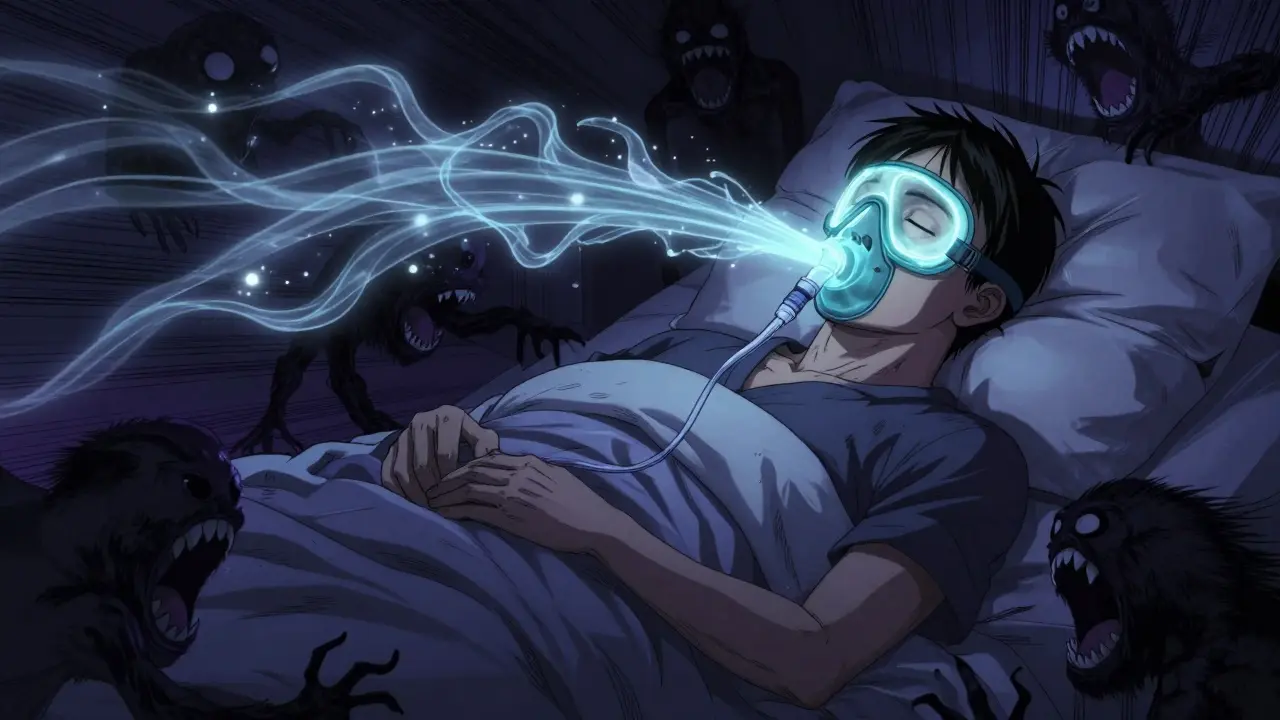
Obstructive sleep apnea (OSA) happens when your throat muscles relax too much during sleep, blocking your airway. You stop breathing-sometimes for 10 seconds or more-dozens of times a night. Your brain wakes you up just enough to restart breathing, but you rarely remember it. The result? You’re not sleeping, even if you think you are. Snoring, gasping at night, and waking up exhausted are classic signs. It’s not just about being tired. OSA raises your risk for high blood pressure, heart attacks, strokes, and even car accidents. About 1 billion people worldwide have it, and most don’t even know.
Why CPAP Is Still the Gold Standard
Continuous Positive Airway Pressure (CPAP) therapy has been the go-to treatment since the early 1980s, when Australian doctor Colin Sullivan first proved it could keep airways open without surgery. Today, it’s still the most effective option for moderate to severe OSA. The machine delivers steady air pressure through a mask, preventing your throat from collapsing. It doesn’t cure OSA, but it stops the breathing pauses dead in their tracks.
Modern CPAP devices are light, quiet, and smart. Most weigh less than 3 pounds and hum at the level of a whisper. Auto-adjusting models (called APAP) sense when you need more or less pressure and change on the fly. BiPAP machines offer two pressure levels-one for inhaling, another for exhaling-helping people who struggle with standard CPAP. Many now connect to apps like ResMed’s AirView or Philips DreamMapper, tracking your usage, leaks, and how well you’re sleeping. Data shows that if you use CPAP for 7+ hours a night, your apnea events can drop from 39 per hour to under 7. That’s not just better sleep-it’s life-saving.
The CPAP Problem: Adherence Is the Real Challenge
Here’s the hard truth: CPAP works only if you use it. And most people don’t. Studies show about half of new users wear their mask less than 4 hours a night. Some quit entirely within the first few months. Why? Mask discomfort is the #1 complaint. People feel claustrophobic. Air leaks out of their mouths. Their nose dries up. One study found that 62% of people who started with a nasal mask switched to a full-face mask within six months because they kept breathing through their mouth.
Even small leaks matter. If you’re only using CPAP for 2 hours a night, you’re still getting moderate to severe apnea-despite the machine running. That’s why insurance companies require you to use it at least 4 hours a night, on 70% of nights, to keep coverage. Only about 70% of users meet that threshold. And while newer machines have better humidifiers, quieter motors, and lighter masks, the core issue remains: it’s hard to sleep with a tube taped to your face. One Reddit user summed it up: "I’ve tried five masks over two years. Still can’t tolerate more than two hours. The claustrophobia is unbearable."

Oral Appliances: A Comfortable Alternative
If CPAP feels like a battle, an oral appliance might be the quiet win you’ve been looking for. These are custom-fitted devices, like mouthguards, that move your lower jaw slightly forward to keep your airway open. They’re small, quiet, and easy to travel with. No electricity. No hoses. Just pop it in before bed and sleep like normal.
They’re not as powerful as CPAP for severe OSA, but they’re far better than nothing. For mild to moderate cases, they work just as well. And here’s the kicker: people stick with them. One review found that after one year, users wore oral appliances on 77% of nights. CPAP? Around 4 to 5 hours per night on average. Six out of six crossover studies showed patients preferred the mouthpiece. It’s not about effectiveness alone-it’s about living with the treatment. If you snore loudly but don’t have severe apnea, or if you hate CPAP’s bulk, an oral appliance is worth a serious look.
Surgery and Implants: Last Resorts with Big Costs
Surgery sounds like a permanent fix, but it rarely is. Procedures like UPPP (removing excess tissue from the throat) only help 40-60% of patients, and recovery takes weeks. Some people end up with worse swallowing or voice changes. Then there’s Inspire therapy-a surgically implanted device that stimulates the nerve controlling your tongue. It reduces apnea events by 79%, but it costs around $35,000 out of pocket and requires a major operation. It’s only approved for people who can’t use CPAP and have moderate to severe OSA. For most, it’s overkill.
Positional therapy devices like NightBalance are another option. They vibrate gently when you roll onto your back, encouraging you to sleep on your side. If your apnea only happens when you’re on your back (which is true for many), this can cut events by over half. It’s non-invasive, cheap, and easy to try. It won’t fix everything, but for some, it’s enough.
Who Benefits Most from CPAP-and Who Doesn’t?
Not everyone responds the same way to CPAP. New research shows it depends on your brain’s "arousal threshold." If you wake up easily during sleep, CPAP feels like a miracle. Your alertness improves, your memory sharpens, your mood lifts. But if your brain is good at ignoring breathing interruptions, CPAP barely changes how you feel. That’s not a failure of the machine-it’s a mismatch of treatment and biology.
That’s why experts now suggest screening for this trait. If you’ve tried CPAP and felt no difference, it might not be your fault. You might need a different approach. People with low arousal thresholds often do better with oral appliances, weight loss, or positional therapy. CPAP isn’t one-size-fits-all. The best treatment is the one you’ll actually use.

What to Do If You’re Struggling with CPAP
Don’t give up. Just switch tactics.
- Try a different mask. Nasal pillows (small prongs in your nostrils) work better for claustrophobic users. Full-face masks help if you breathe through your mouth.
- Use heated humidification. It cuts nasal dryness and congestion by 78%.
- Use a chin strap. If air leaks out your mouth, a simple strap can fix it.
- Start slow. Wear it 1-2 hours during the day while watching TV. Build up to full nights.
- Get support. DME providers offer 24/7 help. Sleep clinics often give 3-5 follow-up visits in the first 90 days.
- Track your data. Use the app. See your progress. Small wins build motivation.
The Future of Sleep Apnea Treatment
Technology is getting smarter. New CPAP machines detect subtle breathing changes before full apneas happen. Apps like Nightware use biofeedback to help you fall asleep faster with your mask on. In the next few years, we’ll see devices that adjust pressure based on your real-time heart rate, oxygen levels, and even snoring sounds. Personalized treatment based on 3D scans of your airway is already being tested.
But the biggest shift isn’t technical-it’s philosophical. Doctors are moving away from "CPAP for everyone" to "the right tool for the right person." If you have mild OSA and hate CPAP, an oral appliance might be better. If your apnea only happens on your back, try sleeping on your side. If you’re overweight, losing even 10% of your body weight can cut apnea events by half.
Final Thoughts: Treatment Is Personal
Obstructive sleep apnea is serious. Left untreated, it wears you down-physically, mentally, emotionally. But you have options. CPAP is the most powerful tool we have, but it’s not the only one. The goal isn’t to use the most high-tech device. It’s to sleep better, feel better, and live longer. That means finding the treatment you can stick with. Talk to your sleep doctor. Try different masks. Consider an oral appliance. Track your progress. Don’t settle for "good enough." Your next good night’s sleep is waiting.
Is CPAP the only treatment for obstructive sleep apnea?
No, CPAP is the most effective treatment for moderate to severe OSA, but it’s not the only one. Oral appliances, positional therapy, weight loss, and even surgery are alternatives. For mild cases or people who can’t tolerate CPAP, oral devices often work just as well-and are easier to stick with long-term.
Why do so many people stop using CPAP?
The main reasons are mask discomfort, feeling claustrophobic, dry mouth or nose, and air leaks. Many users also struggle with the noise or bulk of the machine. Studies show up to 50% of users stop using CPAP within the first year-not because it doesn’t work, but because it’s hard to live with.
Are oral appliances as effective as CPAP?
For mild to moderate obstructive sleep apnea, oral appliances can be just as effective as CPAP at reducing symptoms and improving sleep quality. For severe cases, CPAP is still more reliable at fully eliminating breathing pauses. But oral appliances have much higher adherence rates, making them a better choice for people who can’t tolerate CPAP.
Can losing weight cure sleep apnea?
Yes, for many people. Losing just 10% of your body weight can reduce apnea events by half or more. Weight loss doesn’t always "cure" OSA, but it can reduce severity enough that you no longer need CPAP or can use lower pressure settings. It’s one of the most powerful, drug-free treatments available.
Does insurance cover sleep apnea treatments?
Yes, most insurance plans-including Medicare-cover CPAP machines and oral appliances if you have a diagnosis of OSA. For CPAP, you typically need to prove you’re using it at least 4 hours a night, 70% of the time. Oral appliances usually require a custom fit from a dentist trained in sleep medicine. Always check with your provider for specific coverage rules.
Next steps: If you’ve been diagnosed with OSA, schedule a follow-up with your sleep specialist. Ask about trying a different mask, switching to an oral appliance, or exploring positional therapy. Don’t wait until you’re exhausted all day. Better sleep is possible-and it starts with the right choice for you.
Comments
Kuldipsinh Rathod
December 28, 2025 AT 10:28I used to hate my CPAP mask like it was my ex. Then I switched to nasal pillows and now I forget I’m wearing it. Seriously, don’t give up-just try a different mask. I was skeptical but now I sleep like a baby. 🙏
Jay Ara
December 29, 2025 AT 16:42oral appliances are a game changer for me. no hoses no noise just pop it in and sleep. i tried cpap for 3 months and quit. this thing saved my marriage and my sanity. my dentist made it and it cost half of what cpap did. worth every penny
Bryan Woods
December 30, 2025 AT 12:50The data supporting CPAP adherence rates is compelling, yet the psychological barriers to compliance remain under-addressed in clinical practice. Many patients experience somatic discomfort not merely as a physical inconvenience, but as a profound disruption to personal autonomy during a vulnerable state-sleep. The clinical imperative should shift from prescribing devices to co-designing therapeutic experiences that prioritize user dignity and habit integration.
Michael Bond
December 30, 2025 AT 13:59CPAP isn’t for everyone. But neither is giving up. Try the small stuff first-chin strap, humidifier, different mask. I did. Now I sleep 7 hours. No drama.
SHAKTI BHARDWAJ
January 1, 2026 AT 10:25OMG WHY DO PEOPLE STILL BELIEVE CPAP IS THE ONLY OPTION???!?!?!? I’ve been using a mouthpiece for 2 years and I’m more awake than my coworkers who are on CPAP and still snoring at 3am 😭 the system is broken and doctors just push machines bc they get kickbacks. #SleepApneaScam
Alex Ragen
January 3, 2026 AT 08:43One must contemplate the ontological dissonance inherent in the modern medical paradigm: we pathologize natural physiological states, then impose technological scaffolding to ‘correct’ them-while ignoring the existential reality that sleep is not a problem to be solved, but a mystery to be honored. CPAP, in its clinical arrogance, reduces the human being to a ventilatory algorithm.
wendy parrales fong
January 3, 2026 AT 10:28Just want to say-you’re not broken if CPAP doesn’t work for you. I tried it for a year, felt worse. Then got my oral appliance. Now I sleep like I’m 25 again. It’s not about the machine. It’s about what fits your life. You got this.
Jeanette Jeffrey
January 4, 2026 AT 19:39Ugh. People think oral appliances are ‘magic’? They’re barely better than a mouthguard from Walmart. If you’re not using CPAP properly, you’re just deluding yourself. And no, sleeping on your side doesn’t fix severe apnea. Stop listening to Reddit gurus and get real data. Your oxygen levels don’t lie.
Shreyash Gupta
January 5, 2026 AT 05:30imagine if u could just lose 10% weight and fix it all… but nooo we gotta buy machines and mouthguards and pay 1000s… i lost 25lbs and my apnea went from severe to mild… cpap? nah… i just sleep on my side now 😎
Sarah Holmes
January 6, 2026 AT 18:14You all speak as if sleep apnea is merely a mechanical malfunction, as though the soul does not also suffer in the silence between breaths. To wear a mask is to surrender your dignity to a machine; to choose an appliance is to reclaim your autonomy. But tell me-when you wake at 3 a.m., gasping, and the machine is silent… do you feel liberated… or abandoned? The truth is, none of these devices heal the loneliness of breathlessness. They merely delay the inevitable: the realization that your body is a temple you have neglected. And now, it demands penance.