
How to Share a Complete Medication List to Prevent Dangerous Drug Interactions
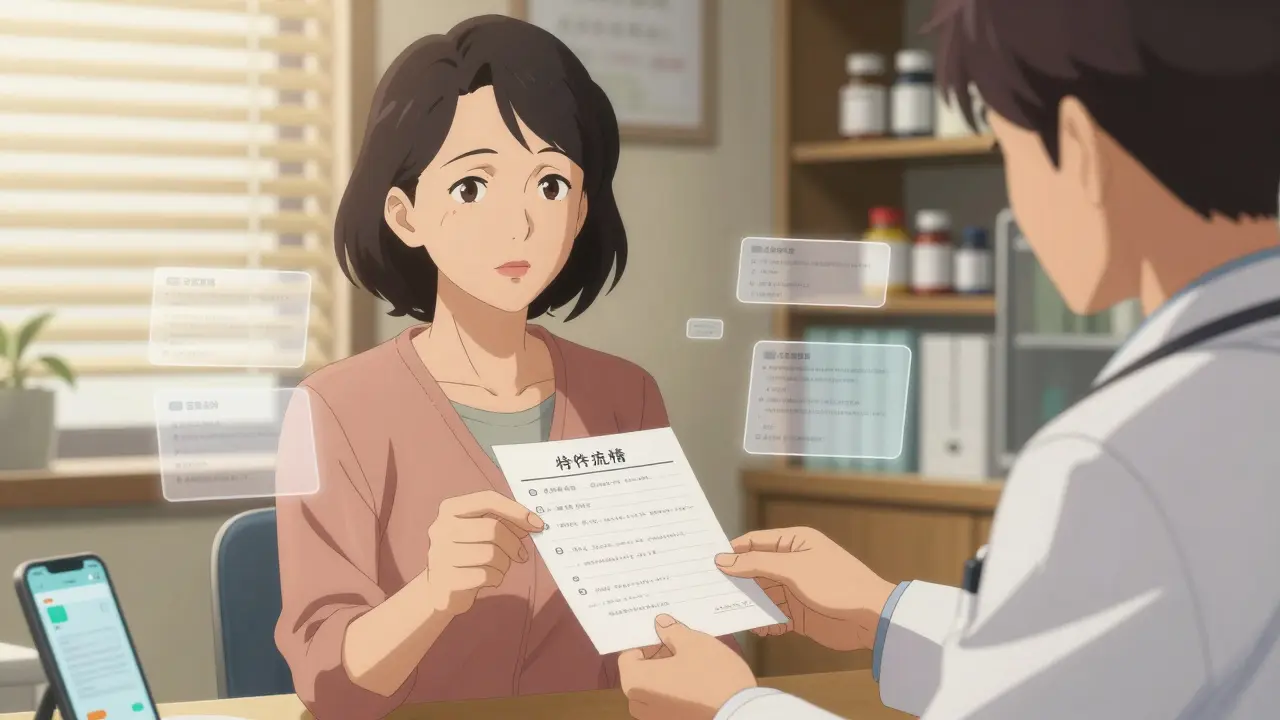
Every year, over 100,000 people in the U.S. die from adverse drug reactions-many of them preventable. The biggest culprit? Medication lists that are incomplete, outdated, or never shared. If you take even a few pills a day, you’re at risk. It doesn’t matter if you’re 30 or 80. If you’re on prescriptions, over-the-counter drugs, vitamins, or herbal supplements, you need a complete, up-to-date list-and you need to hand it to every doctor, pharmacist, or nurse who treats you.
What Goes on a Complete Medication List?
A simple note like "I take blood pressure medicine" isn’t enough. You need details. Here’s exactly what to include for every item:- Exact name: Both brand and generic. Example: "Lisinopril 10 mg" (not just "blood pressure pill").
- Dosage: How much you take each time. "500 mg" not "a pill".
- Frequency: Once a day? Twice? Every 6 hours?
- Route: Oral? Topical? Injected?
- Why you take it: "For high blood pressure," "for arthritis pain," "for anxiety." This helps providers spot duplicates.
- Start date: When did you begin taking it?
- Prescribing provider: Who wrote the prescription? Dr. Lee? Dr. Patel?
- Special instructions: "Take on empty stomach," "avoid grapefruit," "take with food." These matter.
Don’t forget the stuff people leave off: over-the-counter meds like Tylenol, Advil, or antacids. Vitamins like Vitamin D3 2000 IU. Supplements like fish oil, magnesium, or St. John’s Wort. Even herbal teas if you drink them daily. These cause 30% of serious drug interactions, according to the FDA.
Also include any allergies-with specifics. Not just "allergic to penicillin." Say: "Penicillin-causes hives and trouble breathing." That level of detail saves lives.
Why Paper Lists Alone Don’t Work
You’ve probably seen the wallet-sized card. It’s better than nothing-but it’s outdated by the time you get to the ER. A 2022 study found only 62% of paper lists were accurate during emergencies. Why? People forget to update them. They lose them. They don’t write down the new antibiotic their doctor gave them last week.And here’s the problem: providers rarely ask for your list. A MedlinePlus survey found 63% of doctors don’t routinely request one. That means if you don’t hand it to them at the start of the visit, it won’t be reviewed.
Digital Lists Are Better-but Not Perfect
Smartphone apps like Medisafe or MyMeds help. They send reminders, track doses, and let you share a PDF with providers. A 2023 study showed users of these apps had 76-83% better adherence. But here’s the catch: 23% of adults over 65 don’t own smartphones, according to Pew Research. Digital tools aren’t universal.Even the best EHR systems in hospitals only capture about 52% of over-the-counter meds and 38% of supplements. Your doctor’s system might show your blood pressure pill-but not the melatonin you take at night. That’s why you still need your own list.
The Best System: Combine Methods
The most effective approach isn’t one tool-it’s three:- Use one pharmacy for all prescriptions. Independent pharmacies have drug interaction software with a 92% detection rate for major interactions, per FDA data. They’ll flag conflicts before you even leave the counter.
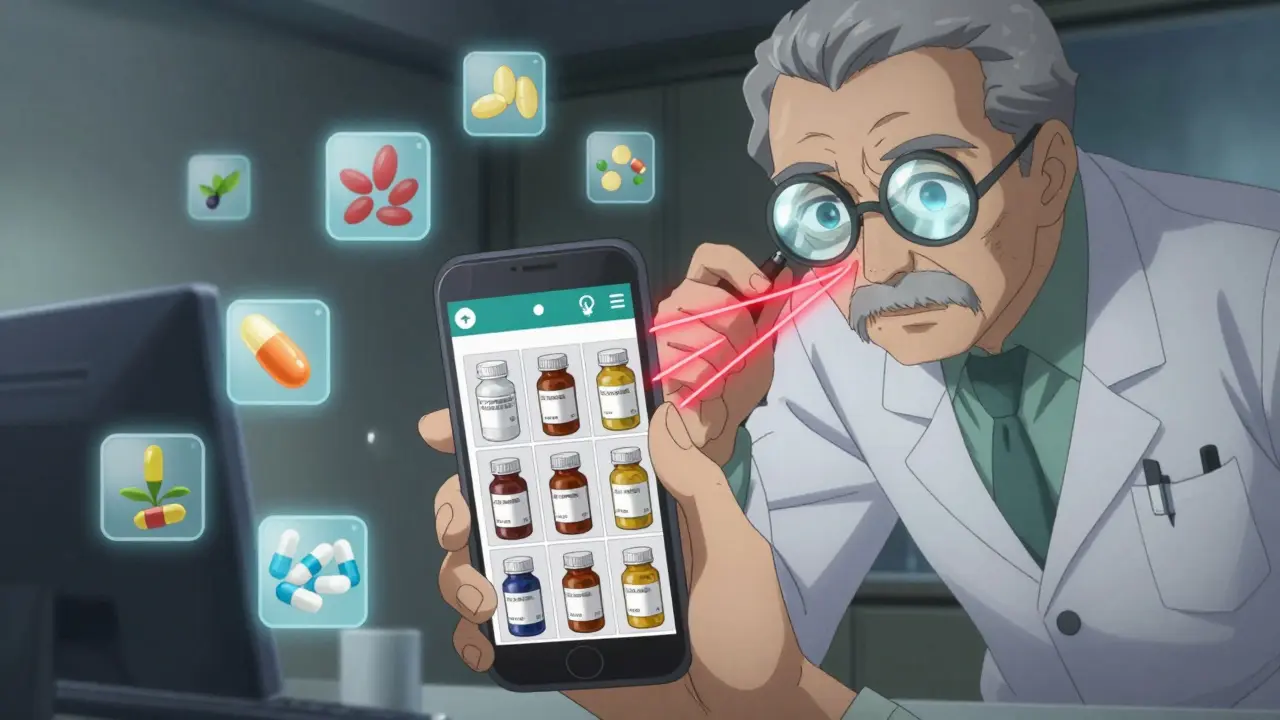
- Take photos of every pill bottle. Keep them in your phone’s gallery labeled clearly: "Lisinopril 10mg - 2024-01-15.jpg." When you see a new provider, open the album and say, "Here’s everything I take." No one forgets a photo.
- Carry a printed, updated list. Print it. Fold it. Put it in your wallet or purse. Update it within 24 hours of any change-new script, stopped pill, added supplement.
This combo works because it covers every gap. The pharmacy catches interactions you don’t know about. The photos help you remember what you’re taking. The printed list is your backup when tech fails.
What You Must Say to Your Provider
Don’t wait for them to ask. Hand them your list and say:- "I’m on all of these. Could any of them interact?"
- "Are there foods or supplements I should avoid?"
- "Is this new prescription safe with what I’m already taking?"
- "I’ve been taking this for a while-should I still be on it?"
Studies show that when patients ask these questions, providers are 40% more likely to review the list thoroughly. Most don’t do it unless prompted.
Common Mistakes That Put You at Risk
The Institute for Safe Medication Practices tracked the top six errors that lead to harm:- Missing over-the-counter meds (37% of errors)
- Not listing discontinued meds (28%)
- Wrong dosage or frequency (22%)
- No allergy details (19%)
- Missing timing instructions (15%)
- Outdated list (52%-the biggest problem)
People think they’re safe if they only take prescriptions. They’re not. A patient on warfarin nearly died because her cardiologist didn’t know she was taking St. John’s Wort daily for depression. The interaction can cause dangerous bleeding. She only mentioned it after the pharmacist asked.
Who Should Be Your Medication Coordinator?
If you see three or more specialists, you need one person in charge. That’s the advice from ARS Healthcare and the American Medical Association. Who? Your primary care doctor, your pharmacist, or a trusted family member who knows your meds.Why? Specialists focus on their area. Your rheumatologist doesn’t know your cardiologist added a new beta-blocker. Your neurologist doesn’t know you started turmeric for joint pain. One person needs to see the full picture.
Ask your primary doctor: "Can you be my medication coordinator?" Or take it to your pharmacist. Many offer free medication reviews-especially if you’re on five or more drugs.
When and How to Update Your List
Update your list within 24 hours of any change:- New prescription
- Stopped a drug
- Changed dose
- Started a supplement
- Got a new OTC medicine
Do a full review every month. Go through each bottle. Check expiration dates. Make sure your list matches what’s in your medicine cabinet. If you’re on five or more meds, you’re 87% more likely to have a dangerous interaction, per ARS Healthcare. Monthly checks are non-negotiable.
Real Stories, Real Results
On Reddit, a woman named "MedSafetyMom" shared how she saved her father’s life. He was on warfarin, and his new naturopath recommended St. John’s Wort. No one asked about supplements. She printed his full list-including the herbal tea-and handed it to his cardiologist. The doctor immediately canceled the supplement. "He could’ve bled out in his sleep," she wrote.On Yelp, 217 reviews of independent pharmacies from early 2023 credit pharmacists with catching dangerous interactions. One man was taking simvastatin and grapefruit juice daily. His pharmacist flagged it. The interaction can cause muscle damage and kidney failure. He switched to a different statin.
These aren’t rare cases. They’re the norm.
What’s Changing in 2026
The government is pushing for change. The 21st Century Cures Act now requires health records to include patient-reported medication lists. The Office of the National Coordinator launched "My Health Record" in early 2023, letting you pull all your pharmacy data into one digital hub.AI tools like IBM Watson Health now detect interactions with 94% accuracy. By 2026, 75% of digital medication lists will automatically include OTCs and supplements thanks to new data standards.
But none of this matters if you don’t keep your own list updated and share it.
Start Today
Here’s your 10-minute action plan:- Open your medicine cabinet. Take photos of every bottle.
- Write down every pill, vitamin, supplement, and OTC drug you take daily.
- Include the why, how often, and special instructions.
- Print one copy. Put it in your wallet.
- Save a digital copy on your phone.
- Next time you see a doctor, hand them the list before they even sit down.
Don’t wait for a crisis. Don’t hope your provider remembers. Your life depends on this list. Update it. Share it. Keep it with you. It’s the simplest, most powerful thing you can do to avoid a preventable drug reaction.
What if I forget to update my medication list?
Set a monthly calendar reminder labeled "Med List Check." When you refill prescriptions, update the list right then. If you’re unsure about a change, call your pharmacist-they can confirm details and help you update your list. Don’t wait until your next appointment.
Do I need to list vitamins and supplements?
Yes. Vitamins and supplements cause 30% of serious drug interactions. St. John’s Wort can make blood thinners, antidepressants, and birth control pills fail. High-dose Vitamin K can undo warfarin. Even fish oil can increase bleeding risk with aspirin or NSAIDs. List everything-even if you think it’s "natural" or "harmless."
Can my pharmacist help me build my list?
Absolutely. Pharmacists are trained to spot interactions and can pull your full prescription history from their system. Ask for a free medication review. Many pharmacies offer this, especially for patients on five or more medications. They’ll give you a printed list and flag any risks.
What if my doctor ignores my list?
Politely insist. Say: "I’ve had a bad reaction before, so I always bring my list. Can you please check for interactions?" If they still don’t review it, ask for a referral to a pharmacist or a medication therapy management program. Your safety isn’t optional.
How do I handle medications I no longer take?
Keep discontinued meds on your list with a note: "Stopped: 12/15/2025 - caused dizziness." This helps providers understand your history and avoid repeating mistakes. Don’t remove them-just mark them clearly.
Is it safe to share my list digitally?
Yes-if you use secure methods. Use encrypted apps like Medisafe or the FDA’s My Medicine Record. Avoid emailing or texting your full list. When sharing with providers, use secure patient portals or print a copy. Never post it on social media or unsecured cloud storage.


Comments
Dawson Taylor
January 22, 2026 AT 19:38Medication lists are the unsung heroes of patient safety. It’s not glamorous, but neither is dying from a preventable interaction.
Simple. Necessary. Non-negotiable.
Andrew Smirnykh
January 22, 2026 AT 22:48I’ve seen this play out in my family-my grandfather forgot his melatonin, and the ER doctor prescribed a sedative that nearly put him under for three days.
It’s not just about prescriptions. Everything counts.
Even the tea you sip before bed.
Susannah Green
January 23, 2026 AT 16:51OMG YES. I started taking photos of every bottle after my mom got hospitalized because they didn’t know she was taking St. John’s Wort with her antidepressant. She was fine, but it was terrifying.
Now I update my list every Sunday night-like a little ritual. And I always print it. Always.
Pharmacists are angels. Use them. They know more than your doctor sometimes.
Also, if you’re on 5+ meds? Monthly check. No excuses.
And yes, fish oil with aspirin? Yeah, that’s a thing. I learned the hard way.
Lana Kabulova
January 23, 2026 AT 21:18People think if it’s "natural" it’s safe? That’s not how biology works. St. John’s Wort isn’t a herbal tea-it’s a potent enzyme modulator. It interacts with 80% of common meds.
And if you’re not listing your OTC painkillers? You’re playing Russian roulette with your liver.
Also-why are we still using paper lists in 2025? This is basic hygiene. You wouldn’t skip brushing your teeth. Don’t skip updating your meds.
Rob Sims
January 25, 2026 AT 12:09Oh wow. Another post telling people to "just carry a list" like it’s that simple.
Let me guess-you’ve never had to explain to a 78-year-old with dementia why they can’t take Tylenol anymore because their kidney’s failing.
Or tried to get a doctor to look at a list when they’re 10 minutes behind schedule and already annoyed.
Real talk: The system is broken. Your list doesn’t matter if no one’s listening.
And don’t even get me started on "pharmacists are angels." They’re overworked, underpaid, and often the only ones paying attention.
So yes-do your part. But don’t pretend it’s enough.
arun mehta
January 26, 2026 AT 17:20Respectfully, this is one of the most vital health guides I’ve ever read 🙏
As someone from India, where polypharmacy is common and OTC drugs are sold without prescription, this is life-saving knowledge.
I’ve shared this with my elderly aunt who takes 7 supplements and 4 prescriptions-she now has a printed list and a photo album labeled "Medicine Diary" 😊
Thank you for writing this. It’s not just advice-it’s a public health imperative.
Chiraghuddin Qureshi
January 28, 2026 AT 06:15Love this! In my family, we call it "The Medicine Bible" 📖🩺
My mom keeps it in her purse. My dad keeps a copy on his fridge.
Even my 14-year-old sister knows to ask: "Did you update the list?"
Small habits. Big impact.
Also, if you’re using WhatsApp to send your meds list to your doctor? STOP. Just stop.
Use the portal. Or print it. Please.
Patrick Roth
January 29, 2026 AT 03:52Let’s be real-this entire post is just fearmongering wrapped in bullet points.
How many people actually die from drug interactions because they didn’t have a list? 100,000? That’s 0.03% of the population.
Meanwhile, 3 million people die from poor diet, lack of exercise, and smoking.
Why aren’t we pushing "Don’t eat processed food" with the same urgency?
Also, who the hell carries a printed list everywhere? I carry my keys, my phone, and my coffee. That’s it.
This feels like a PSA written by a pharmacist with a clipboard.
Lauren Wall
January 30, 2026 AT 14:58My sister died because they didn’t know she was on warfarin and took Advil for a headache.
She was 42.
Don’t be her.
Update your list.
Jasmine Bryant
January 30, 2026 AT 18:51i just started taking magnesium and forgot to add it to my list and then my dr prescribed me a new sleep med and i think they might interact?? i dont know im so confused
also my phone died and i lost my digital copy and now i cant remember if i took my lisinopril today or not??
help??
Liberty C
February 1, 2026 AT 03:25How quaint. A list. Like we’re back in 1998.
Real patients don’t carry paper. Real patients have AI-driven, blockchain-secured, HIPAA-compliant, voice-activated, biometrically authenticated, cloud-synced medication profiles that auto-update via smart pill dispensers and FDA-approved wearables.
And if you’re still using photos of pill bottles? Honey. You’re not just behind the curve-you’re on a different continent.
But I suppose for those who still believe in pen and paper, and the sanctity of the human memory-well, bless your heart.
Try not to die.
And if you do? At least your obituary will mention your list.