
Coping Strategies for Long-Term Chronic Medication Use: What Actually Works
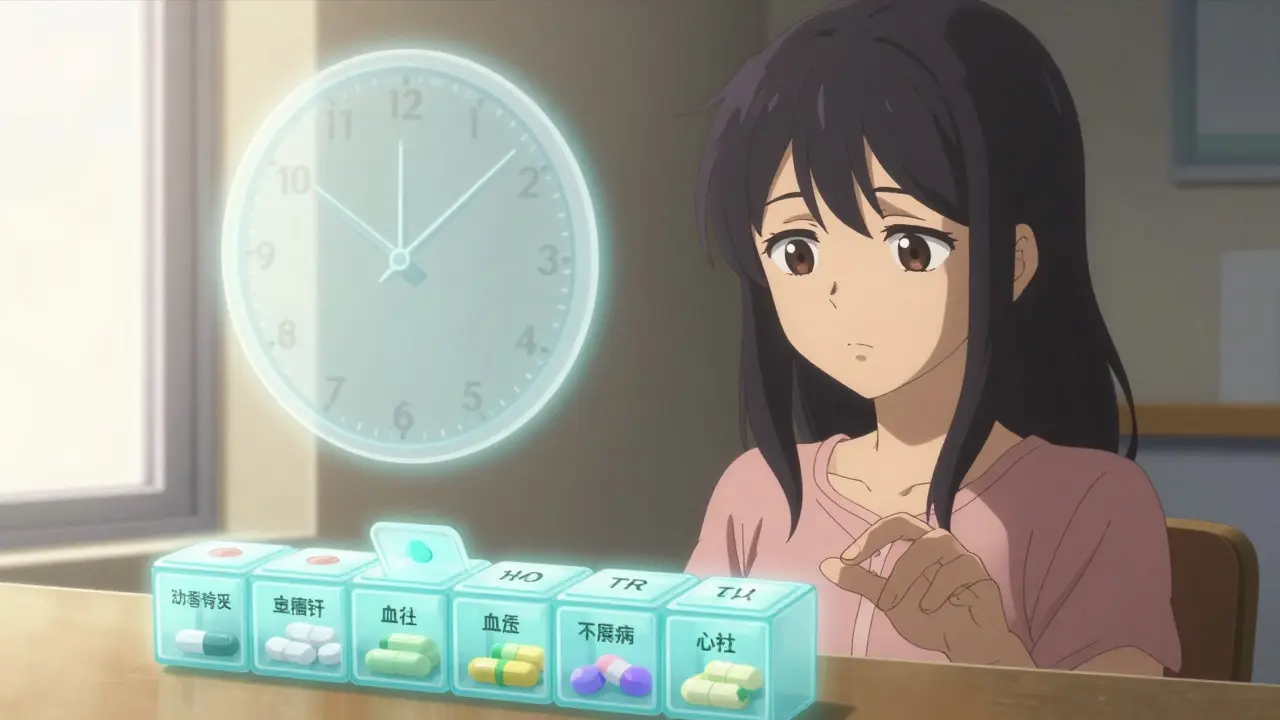
Taking a pill every day for years isn’t just a habit-it’s a lifeline. For people managing diabetes, high blood pressure, rheumatoid arthritis, or heart disease, medication isn’t optional. But here’s the hard truth: medication adherence drops off fast. Studies show that nearly half of people with chronic conditions don’t take their meds as prescribed. And it’s not because they’re careless. It’s because life gets in the way-side effects, cost, confusion, emotional burnout, or just plain exhaustion.
Why sticking to your meds is harder than it looks
Imagine waking up every morning to a pillbox with 8 different medications. Some need to be taken with food, others on an empty stomach. One makes you dizzy. Another gives you nausea. A third costs $200 a month, even with insurance. Now add in work, kids, appointments, and the quiet dread that comes with living with a condition that never goes away. This isn’t just about forgetting a pill. It’s about managing a constant, invisible weight. The CDC says poor adherence costs the U.S. healthcare system $100-300 billion a year. That’s not just money-it’s hospital stays, emergency visits, and preventable complications. But blaming patients doesn’t fix it. The real issue? We’ve treated adherence like a memory problem, when it’s actually a coping problem.The five coping strategies that actually move the needle
Research from a 2022 review of 15 studies across chronic conditions breaks down five main ways people cope with long-term medication use. Not all of them help. Some even hurt. Here’s what works-and what doesn’t.1. Problem-solving / active coping (the most effective)
This is the strategy that works best. People who actively solve problems around their meds have the highest adherence rates. That means: figuring out how to afford pills, setting phone alarms, talking to their pharmacist about side effects, or asking their doctor if they can switch to a once-daily combo pill. In 78% of studies, this approach linked directly to better adherence. One study with rheumatoid arthritis patients found those who used active coping had significantly higher adherence scores. They didn’t just take pills-they tweaked their routines, asked questions, and refused to let the system win.2. Emotion-focused coping (second best)
Sometimes, the problem isn’t logistics-it’s feelings. Fear. Anger. Grief. Shame. People who cope by acknowledging and managing those emotions do better than those who ignore them. This includes journaling, talking to a counselor, joining a support group, or using mindfulness to handle the stress of being “sick forever.” In 69% of studies, this strategy helped. One patient said, “I stopped feeling guilty for hating my pills. That made it easier to take them.”3. Seeking understanding
People who dig into their condition-reading up, asking doctors for explanations, watching educational videos-tend to stick with meds longer. Knowledge reduces fear. When you understand why a drug matters, it stops feeling like a punishment. A diabetes patient in one study said, “I didn’t know high blood sugar was slowly killing my nerves. Once I understood, I couldn’t skip my metformin.”4. Support-seeking
No one should manage chronic illness alone. People who reach out-whether to family, friends, pharmacists, or online communities-have better outcomes. Support isn’t just emotional. It’s practical: someone to remind you, drive you to the pharmacy, or help you call your insurance company. Team-based care models that include pharmacists, nurses, and social workers boost adherence to 89%-up from 74% in standard care. That’s not magic. That’s human connection.5. Problem avoidance (the trap)
This is the silent killer. Ignoring the problem. Pretending you’re fine. Skipping doses because “it’s not that bad today.” In half the studies, this strategy led to worse adherence. It’s the go-to for people overwhelmed or in denial. But here’s the catch: in 30% of cases, it worked-usually for people with mild symptoms or strong social support. That doesn’t make it safe. It makes it risky.What doesn’t work-and why
Simple reminders? Helpful, but not enough. A pillbox won’t fix fear of side effects. A text alert won’t cover a $500 co-pay. Many clinics still rely on “just take your meds” advice. It’s like telling someone with a broken leg to just walk more. You need tools, not just encouragement. Even worse? Blaming patients for “noncompliance.” That word implies choice. Most people aren’t choosing to skip meds-they’re choosing between rent and refills.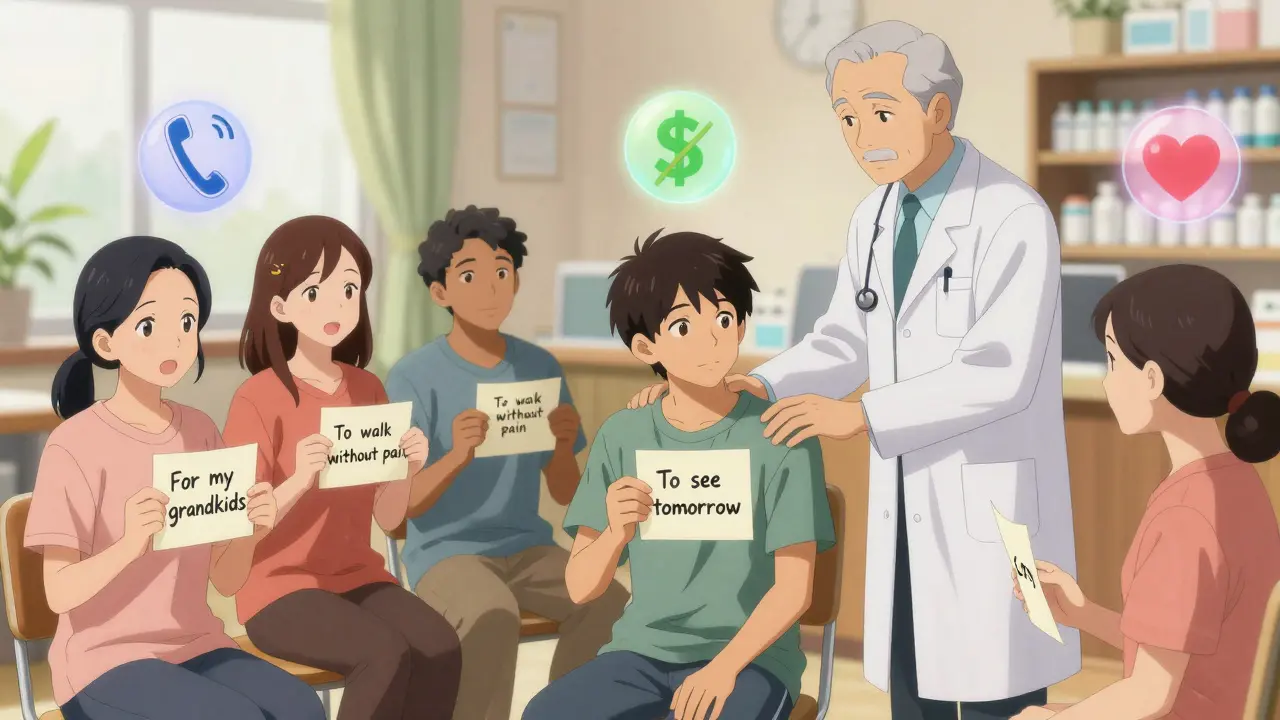
Real-world fixes that work
The CDC and other experts agree: solutions need to be practical, not preachy.- Simplify the regimen. Ask your doctor: Can I switch to a once-daily pill? Is there a combination drug? Fewer pills = better adherence.
- Lower the cost. Use RxAssist.org or ask your pharmacist about generics. Many drug companies offer patient assistance programs. You won’t know unless you ask.
- Use tech smartly. Apps like Medisafe or MyTherapy send reminders and track doses. Voice messages from pharmacies (yes, real phone calls) have been shown to improve refill rates.
- Get team support. Pharmacists can do more than fill prescriptions. They can check for drug interactions, help with insurance, and even call your doctor to simplify your list.
- Find your why. Write down one reason you take your meds. “So I can play with my grandkids.” “So I don’t end up in the hospital.” Put it on your fridge.
Demographics matter-more than you think
Here’s something most clinics ignore: who you are affects how well you stick to meds. In the rheumatoid arthritis study, women were 4.5 times more likely to adhere than men. Older adults did better than younger ones. People with shorter disease duration stuck with treatment more than those who’d been sick for years. Why? Maybe women are more likely to seek support. Maybe older people have more routines. Maybe the longer you’re sick, the more tired you get. This means one-size-fits-all advice fails. A 25-year-old man with high blood pressure needs different help than a 70-year-old woman with diabetes.
What to ask your doctor
Don’t wait until you’re struggling. Bring these up at your next visit:- “Can we reduce the number of pills I take?”
- “Are there cheaper alternatives or assistance programs?”
- “What side effects should I expect-and what can I do about them?”
- “Can you refer me to a pharmacist who helps with adherence?”
- “Is there a support group or counselor you recommend?”
The bottom line
Taking medication for life isn’t about willpower. It’s about building a system that works with your life-not against it. The best coping strategies aren’t about being perfect. They’re about being practical. Problem-solving gets you there fastest. Emotion-focused coping keeps you going when it’s hard. Support keeps you from falling off entirely. And if you’re feeling overwhelmed? You’re not failing. You’re human. Start small. One change. One conversation. One pill taken on time. That’s how you win.Why do people stop taking their chronic medications?
People stop for many reasons-side effects, cost, feeling better and thinking they don’t need it anymore, confusion about dosing, or emotional fatigue. Many don’t realize their symptoms are controlled because of the medication. Others can’t afford it, or they’re overwhelmed by taking multiple pills daily. It’s rarely about laziness.
Can coping strategies really improve medication adherence?
Yes. Studies show problem-solving and emotion-focused coping improve adherence in 78% and 69% of cases, respectively. When people actively manage barriers-like cost, side effects, or stress-they’re far more likely to stick with their regimen. These aren’t just “feel-good” tips; they’re evidence-backed tools.
What’s the most effective coping strategy for long-term meds?
Problem-solving or active coping is the most effective. This means identifying specific barriers (like cost or timing) and taking concrete steps to fix them-like asking for a generic version, setting phone alarms, or using a pill organizer. People who do this consistently are nearly 8 out of 10 more likely to stay on track.
How can I get help paying for my chronic medications?
Talk to your pharmacist-they often know about patient assistance programs. Websites like RxAssist.org list free or low-cost options for brand-name drugs. Many drug manufacturers offer coupons or discount cards. You can also ask your doctor about generic alternatives or combination pills that lower costs.
Should I tell my doctor if I’m skipping doses?
Absolutely. Your doctor can’t help you if they don’t know the problem. Skipping doses isn’t a failure-it’s feedback. They might be able to simplify your regimen, switch you to a cheaper drug, or adjust timing to fit your schedule. Honesty saves lives.
Are there apps that help with medication adherence?
Yes. Apps like Medisafe, MyTherapy, and Mango Health send reminders, track doses, and even alert family members if you miss a pill. Some sync with pharmacy refill systems. They’re not magic, but they help people who struggle with routine or memory.
Why do some people do better with adherence than others?
It’s not just about willpower. Women, older adults, and people with shorter disease duration tend to adhere better. Support systems matter-people with family or pharmacist support do significantly better. So do those who understand why their meds matter. It’s a mix of psychology, access, and social factors.
Can team-based care really improve adherence?
Yes. Studies show patients in team-based care-where pharmacists, nurses, and doctors work together-have 89% adherence rates, compared to 74% in standard care. Pharmacists help simplify regimens, check for interactions, and connect patients with financial aid. It’s not just about the pill-it’s about the whole system around it.
Comments
Stewart Smith
December 31, 2025 AT 03:39Man, I’ve been on 7 meds for 5 years. Some days I just stare at the pillbox like it’s a hostile alien. But I set alarms, and my dog whines if I don’t take them-turns out, furry little enforcers work better than apps.
Not perfect. But better than last year.
Retha Dungga
January 1, 2026 AT 04:53life is a glitchy app and meds are the update you never asked for 🤷♀️💊
but hey if u can laugh at the chaos u kinda win right? 😅
Jenny Salmingo
January 1, 2026 AT 18:36I used to feel guilty for forgetting. Then I realized: if I can remember to feed my cat, I can remember to take my pills. Just need to tie it to something real.
Now I take them after I brush my teeth. Simple. Works.
Aaron Bales
January 2, 2026 AT 01:20Problem-solving is the only strategy that matters. No fluff. No guilt. Identify the barrier. Fix it. If cost is the issue, ask for generics. If timing’s messy, ask for combo pills. If side effects suck, talk to your pharmacist. Done.
Stop waiting for motivation. Build systems.
Lawver Stanton
January 3, 2026 AT 05:59Okay but let’s be real-this whole ‘coping strategy’ thing is just capitalism’s way of making sick people fix broken systems themselves.
You want me to ‘solve’ my $300 co-pay? Cool. I’ll just sell a kidney. Or maybe I’ll ask my boss for a raise while I’m at it.
Meanwhile, the drug companies are laughing all the way to the bank with their $12 billion profits.
Don’t tell me to ‘be proactive’ when the system’s rigged. I’m tired. And I’m not your inspiration porn.
Also, why do we keep calling this ‘adherence’ like it’s a cult? I’m not signing up for a religion-I’m trying not to die.
Sara Stinnett
January 5, 2026 AT 01:16Problem-solving? Emotion-focused coping? Please. This is just therapeutic waffle dressed in CDC jargon.
People don’t skip meds because they’re ‘overwhelmed’-they skip them because the pills don’t make them better. They make them nauseous, dizzy, and broke.
And if you think journaling fixes a $500 co-pay, you’ve never had to choose between insulin and rent.
This isn’t psychology-it’s victim-blaming with a PowerPoint.
linda permata sari
January 7, 2026 AT 01:05I’m from Indonesia and here, people take meds like it’s tea-every morning, no fuss. But we don’t have $200 pills. We have generics, community pharmacies, and neighbors who remind each other.
Maybe the real problem isn’t the patient… it’s the price tag.
Also, I cried reading this. Thank you for saying it out loud.
Brandon Boyd
January 8, 2026 AT 09:16Small wins matter. One pill. One reminder. One conversation with your pharmacist.
You don’t have to be perfect. You just have to show up-even if it’s messy.
I’ve been there. I’m still here. And so can you.
Start today. Not tomorrow. Today.
Branden Temew
January 10, 2026 AT 00:55So we’re supposed to ‘solve’ our way out of systemic failure? That’s like telling someone drowning to improve their swimming technique.
And yet… I get it. I’ve done the pill organizer. The alarms. The apps.
None of it fixed the loneliness. None of it fixed the cost.
But I still take my pills.
Not because I’m strong.
Because I’m stubborn.
And maybe that’s the only coping strategy that’s real.
Frank SSS
January 10, 2026 AT 11:08Wow, another feel-good article that ignores the real issue: the healthcare system is a predatory circus.
You think a pillbox fixes a $400 co-pay? You think journaling helps when your insurance denied your last refill?
Meanwhile, I’ve been on the same meds for 12 years. I’ve had three ER visits because I skipped doses to afford groceries.
So no, I don’t need a ‘strategy.’ I need a new economy.
And honestly? I’m done pretending this is about willpower.
Paul Huppert
January 11, 2026 AT 06:01My mom takes 9 pills a day. I help her sort them every Sunday. We listen to old Motown while we do it.
It’s not about fixing the system. It’s about making the ritual matter.
Just being there? That’s the real support.
Hanna Spittel
January 13, 2026 AT 04:04Are you sure this isn’t a pharmaceutical ad? 🤔
Why are they pushing apps and ‘team-based care’? Who’s funding this study?
And why is no one talking about how the FDA approves drugs that cause 100k deaths a year?
Also… are you sure your ‘problem-solving’ isn’t just brainwashing? 🧠💊 #BigPharmaWatching